

Beacharound: from a beach attendant’s working day to 640,000 users
A management system for beach clubs and a portal for booking a beach umbrella. We built them with Alberto Parma, first as partners and then as shareholders.
In short
Beacharound is the startup born in 2020 from an idea by Alberto Parma, an entrepreneur from Cattolica, Italy, and developed together with Opificio Lamantini Anonimi, which also became a shareholder. It included a cloud management system for beach clubs and a portal for booking a beach umbrella online, on a serverless AWS infrastructure. It reached 640,000 users and was later acquired.
Project facts
- Project
- Beacharound (portal) and Beacharound Business (management system)
- Founder
- Alberto Parma, Cattolica (Rimini, Italy)
- Sector
- Beach tourism, management software
- Launch
- Spring 2020, on the market nine months later
- Opificio’s role
- Product partner, UX/UI, development, infrastructure, SEO, growth. And shareholder
- Technology
- Serverless infrastructure on AWS: Lambda, event queues
- Users
- From 30,000 (year 0) to 640,000 (year 3)
- Outcome
- Acquired by a company in the sector
In spring 2020 Alberto Parma, an entrepreneur from Cattolica, wanted a small booking engine for beaches. Nine months later there was a complete management system and a booking portal. Three years later, 640,000 users. Then the acquisition. We believed in it so much that we became shareholders.
The starting point
Where did Beacharound start from?
From an online directory of beach club contacts. The goal was a small product: a booking engine for reserving a spot on the beach. The market had almost no large players, and beach clubs were run by hand, the old way: paper, phone, the beach attendant’s memory.


Two promises, two audiences: people looking for a place by the sea, and people running the beach.
How does a small product become a platform?
Booking was only the tip of the iceberg. Underneath was a whole beach club to run.
Working with Alberto and his team, we realised the problem wasn’t just booking: it was running the whole beach club. In nine months the directory became a cloud management system and a booking engine that was entirely new to the sector.
With no established competitors, there was nothing to copy. Every solution was built from scratch.
One brand, two products
Beacharound and Beacharound Business

How do you design software for people who have never used software?
By watching the people who will use it at work. What the beach attendant does when opening the beach club, when a family turns up without a booking, when the weather changes.
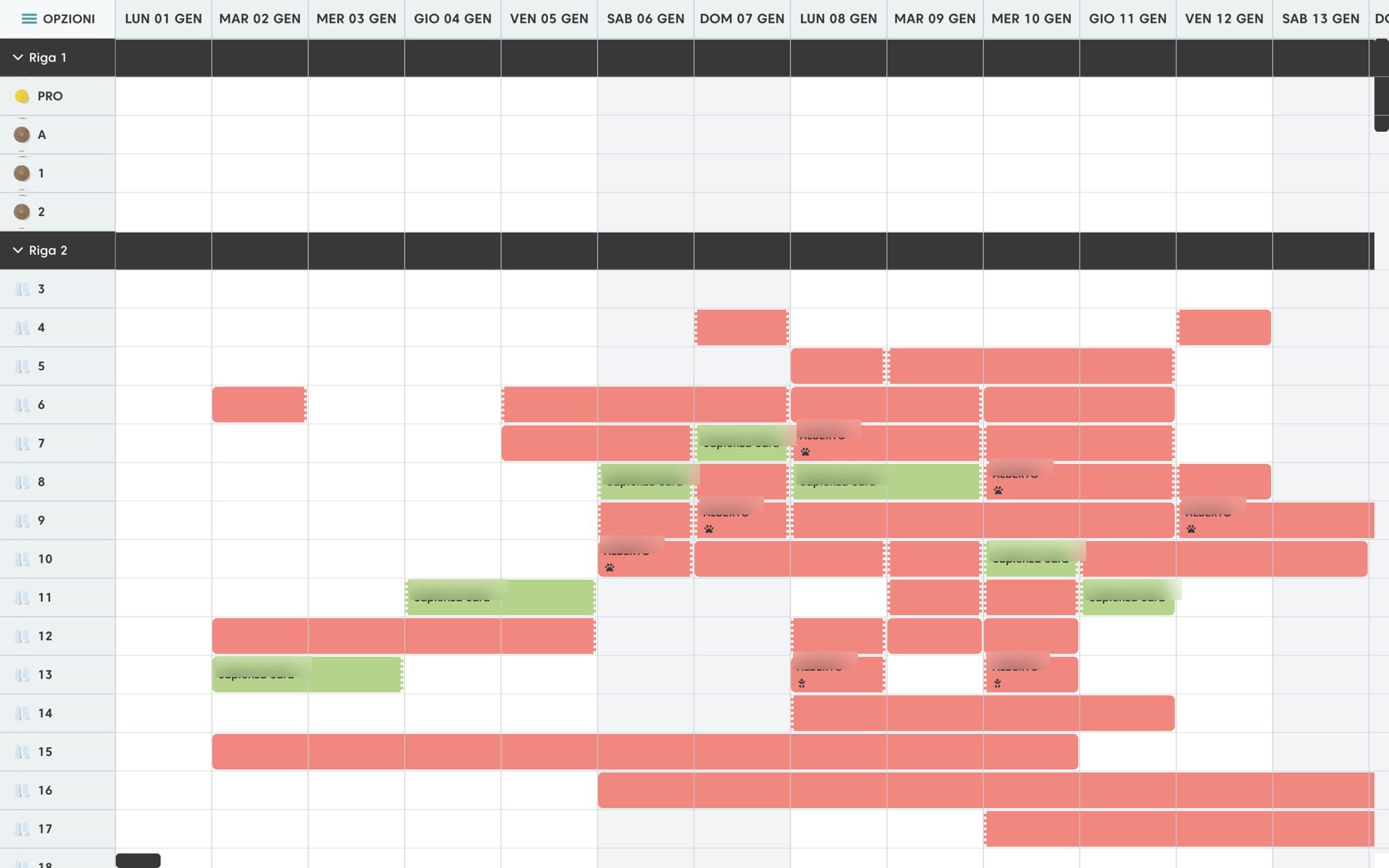
A user-centred approach: start from the needs of each beach attendant and their daily tasks. Usage data showed where most time was spent: bookings, umbrella assignment and the beach view. That’s where we focused: the pages where users spent 85% of their time were redesigned to remove every bit of friction.
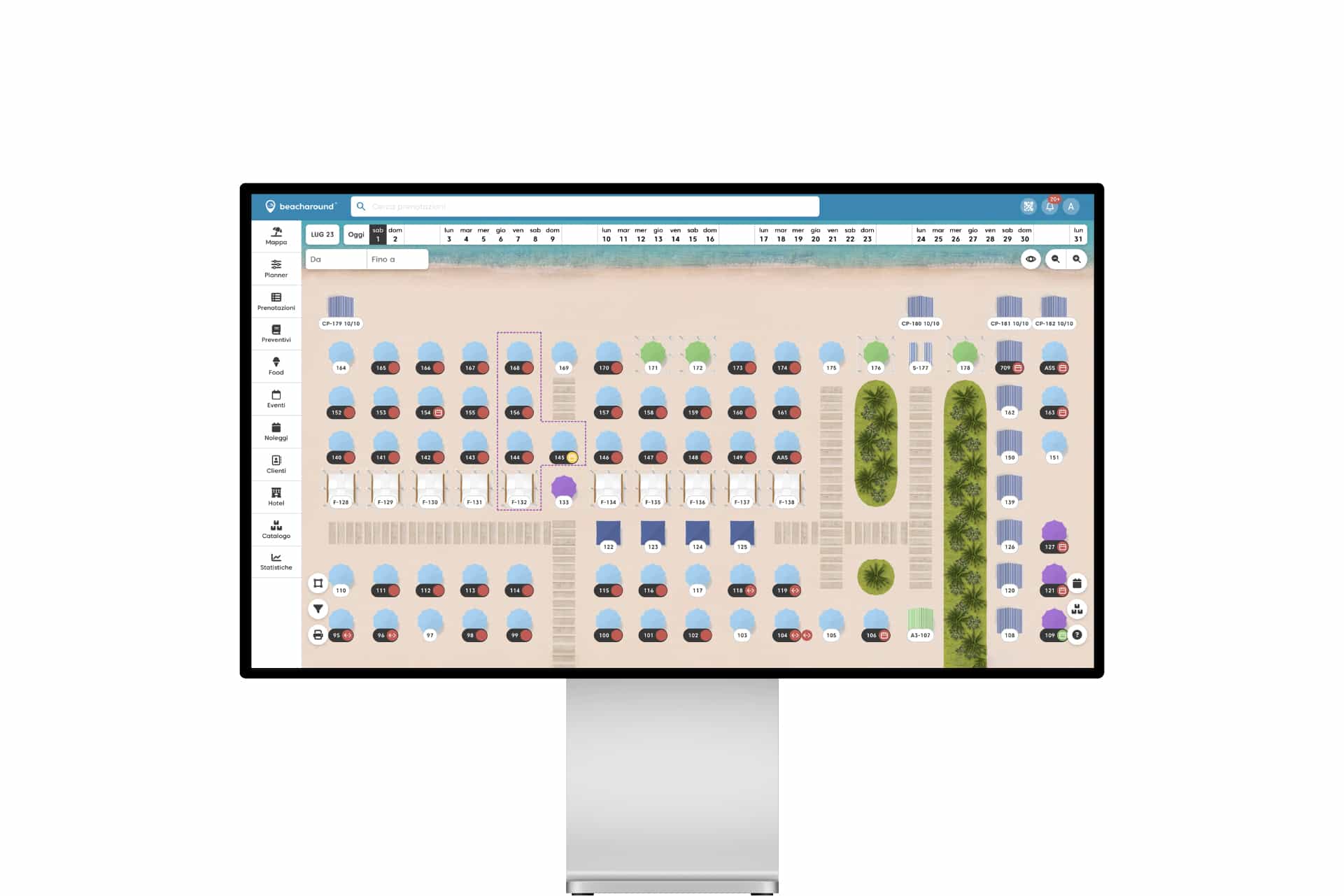
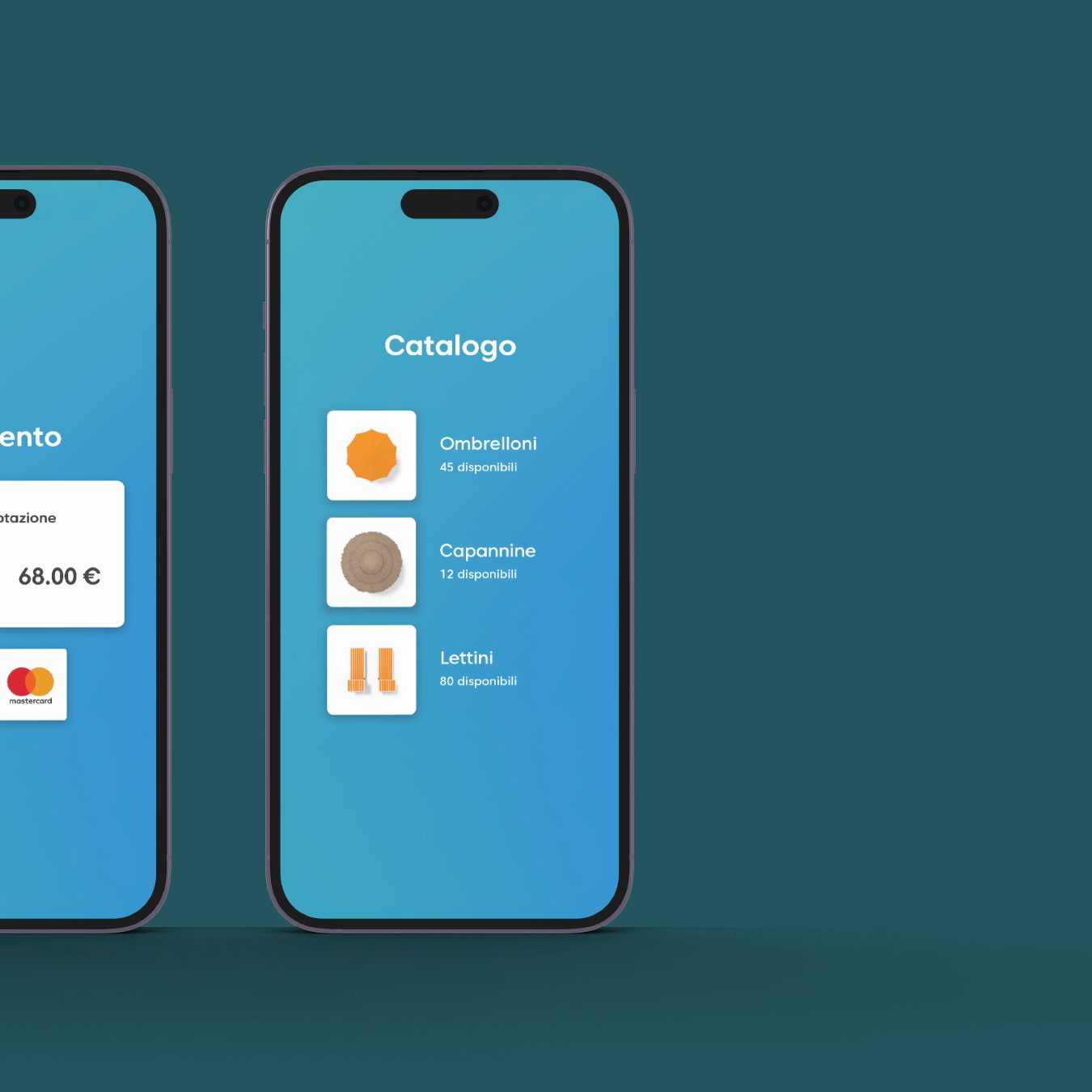
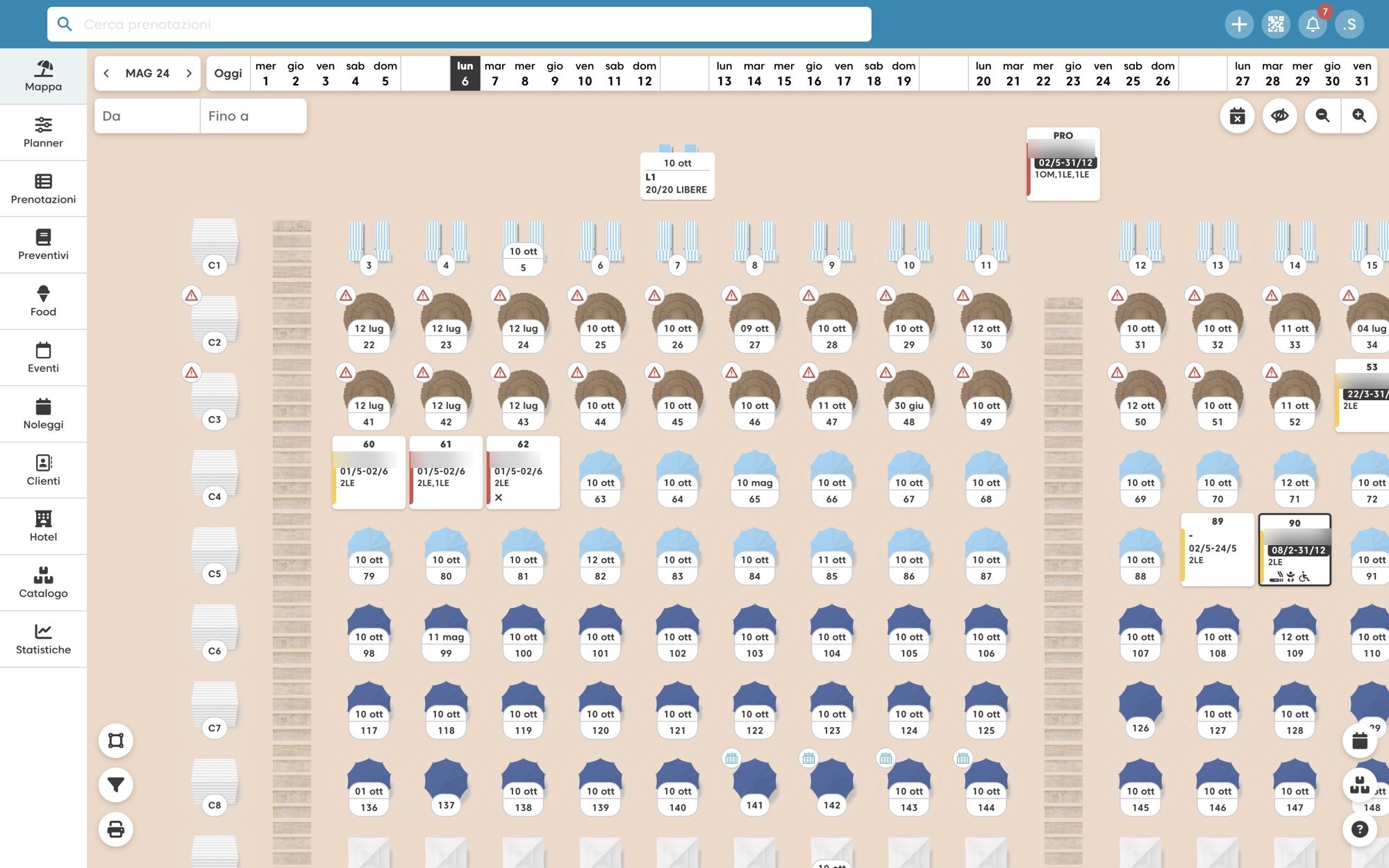
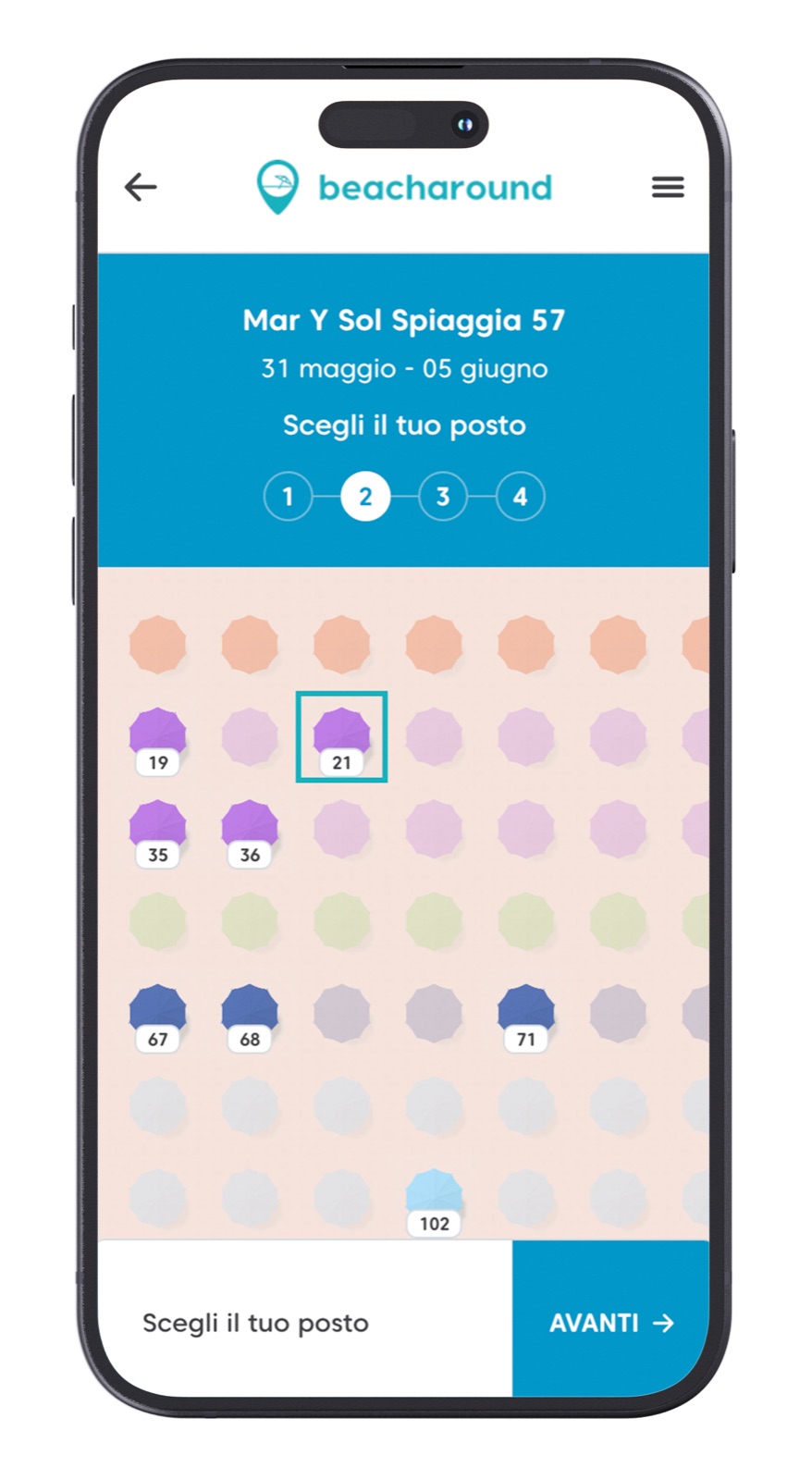
The interactive beach gives a visual, real-time view of occupancy. Tasks take a few clicks, with fewer errors. The interface is clean, usable even by people with little digital experience, and quick to learn.
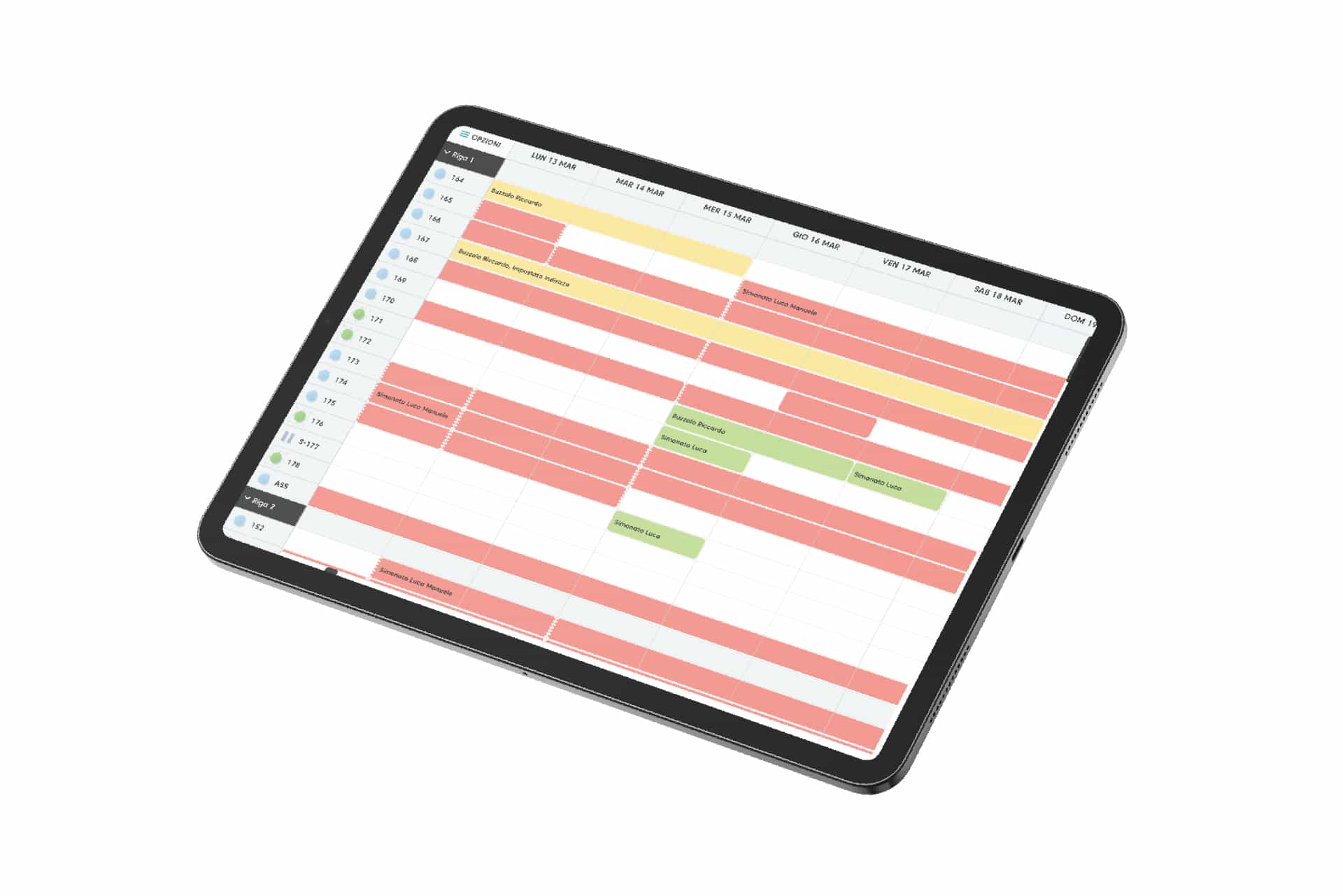
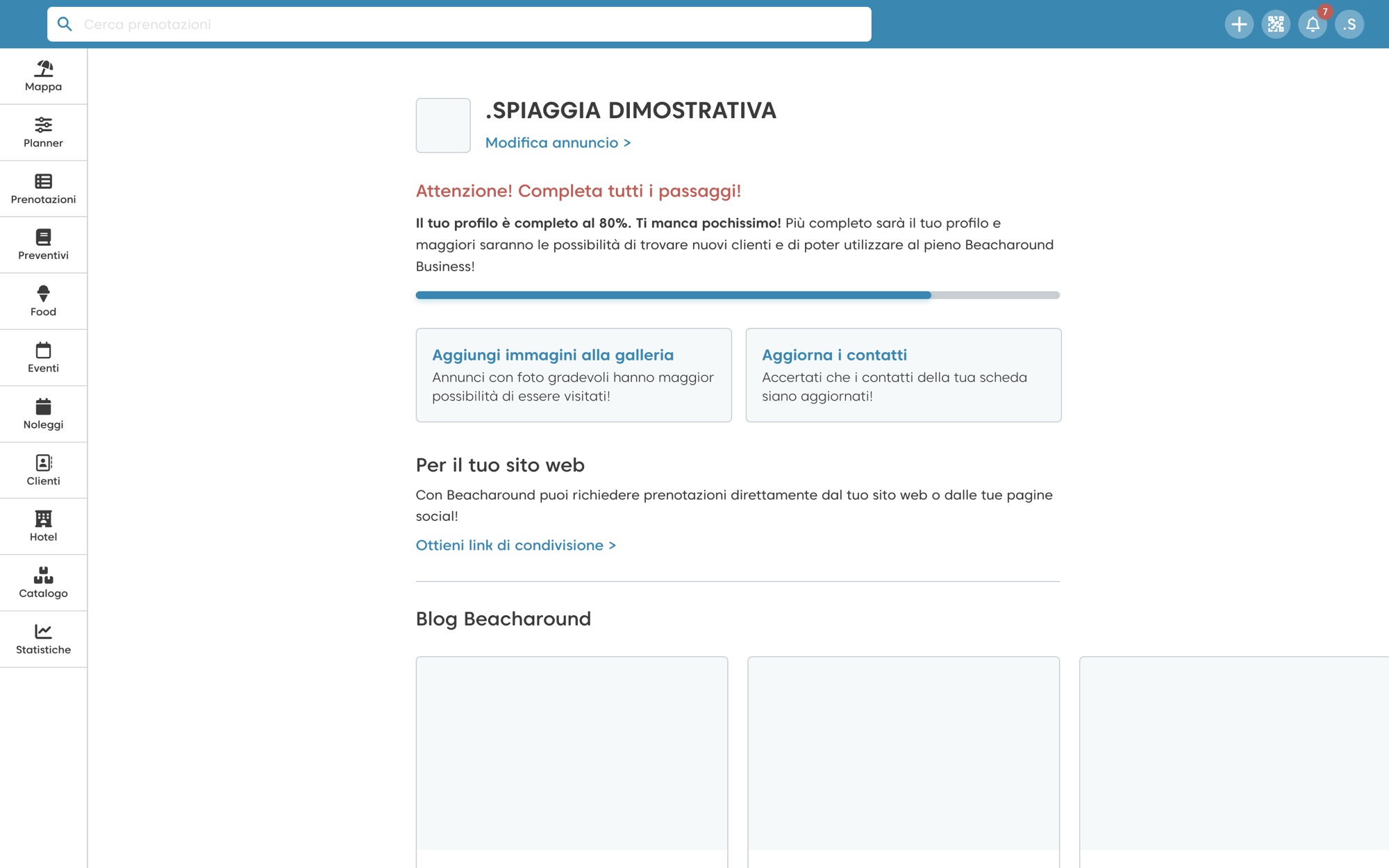
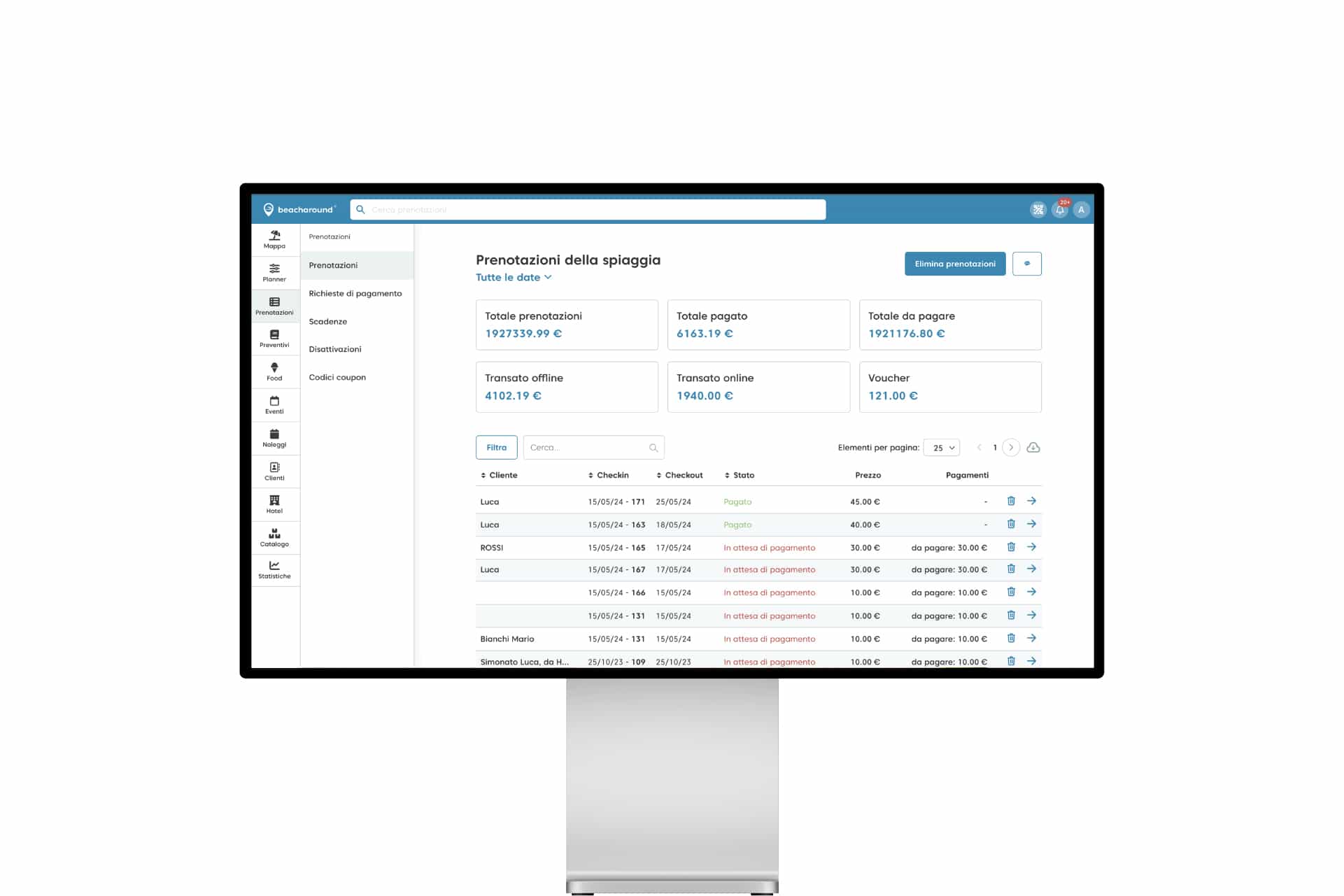
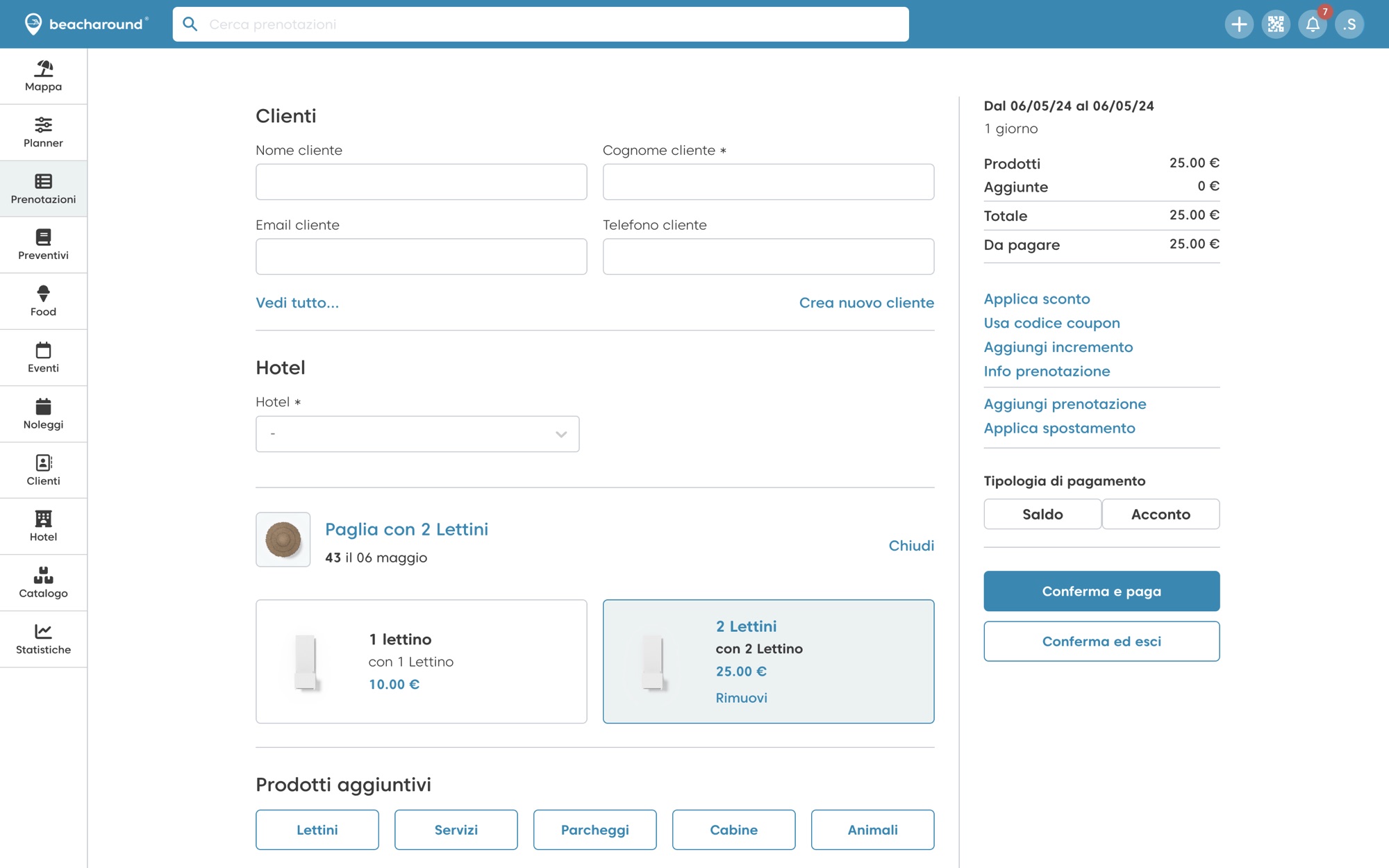
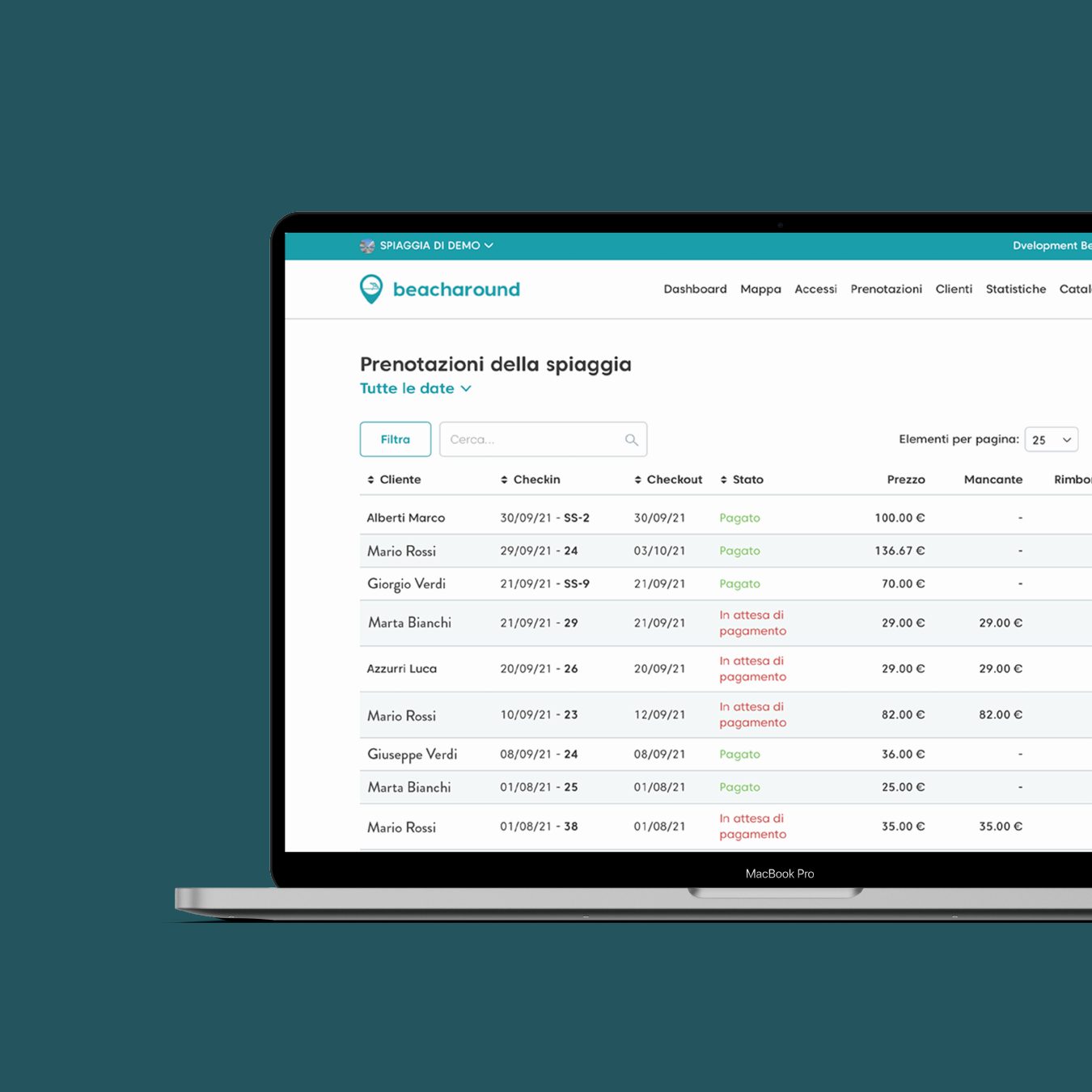
The screens of daily work
Bookings and planner, customer names are blurred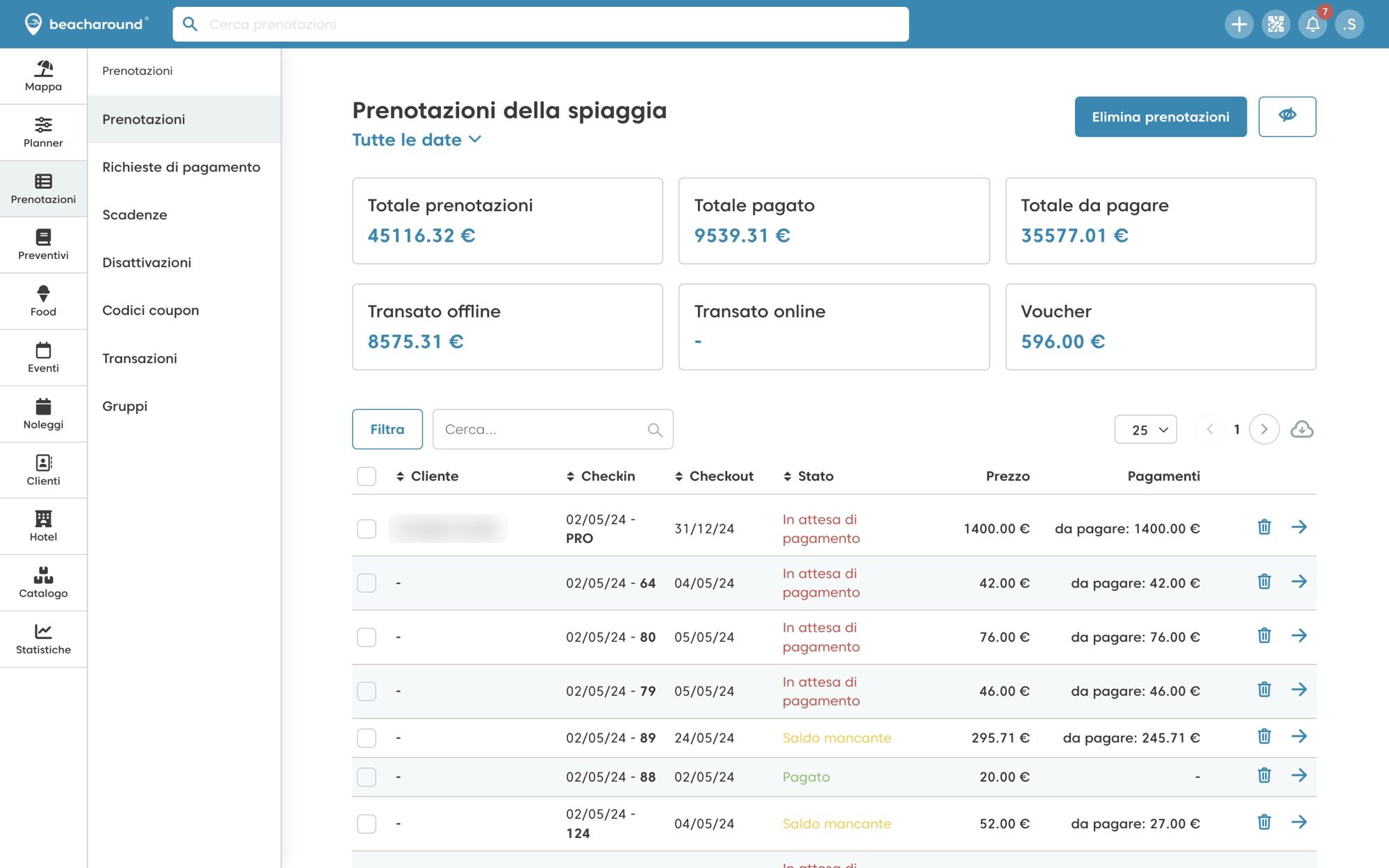
The management system, told
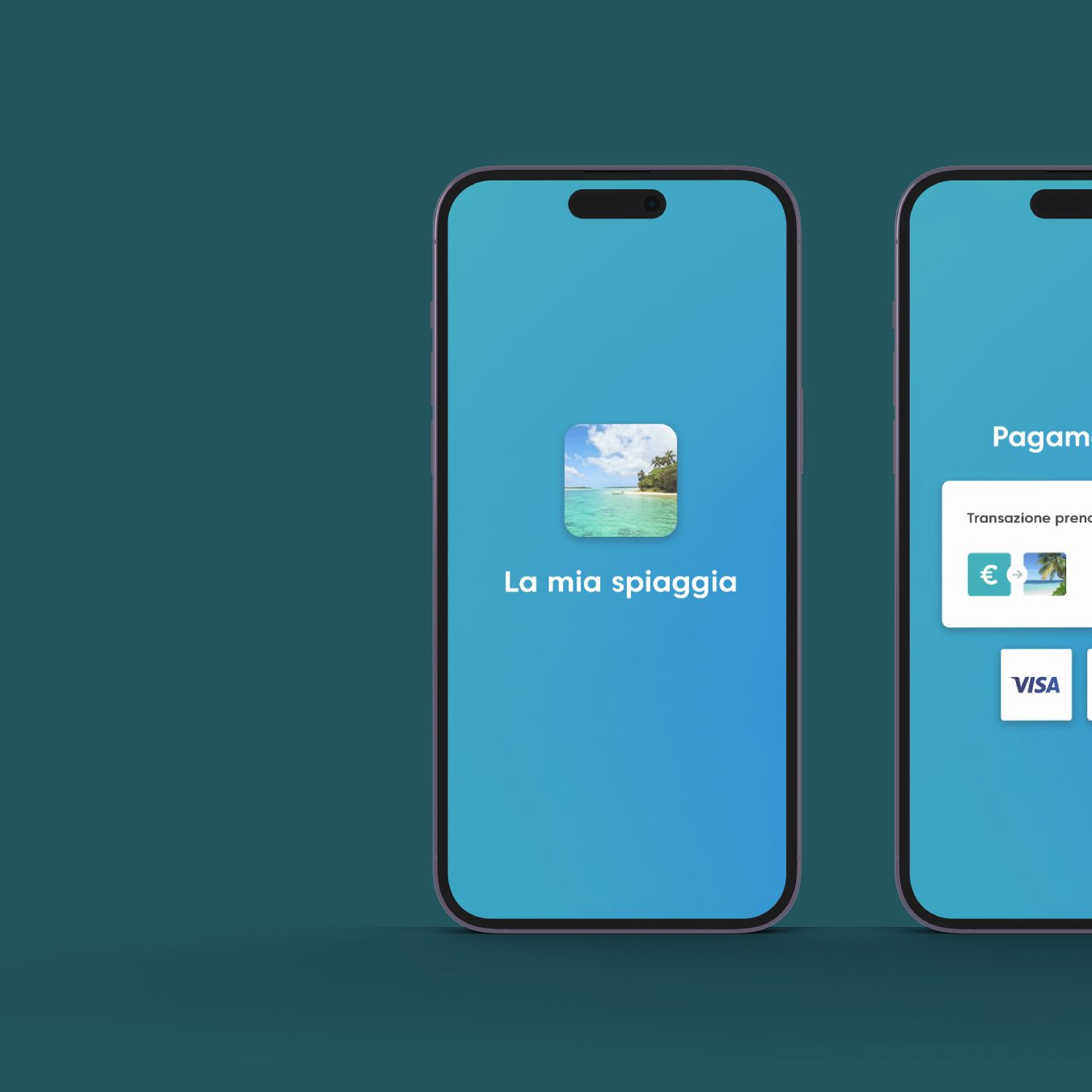
From Beacharound Business communication · scroll →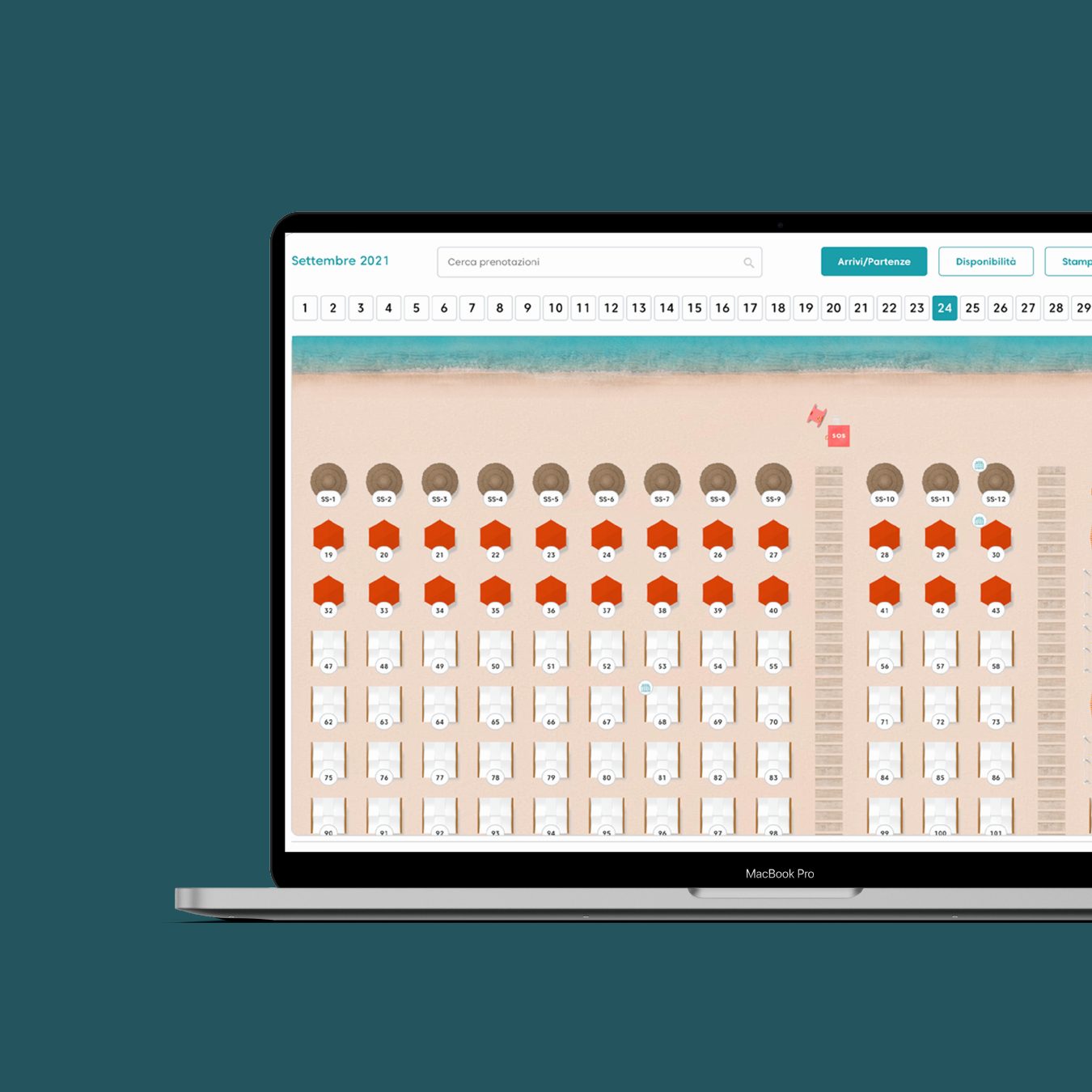



Why does a realistic interface sell more?
The beach attendant doesn’t look at a table. They look at their beach. So that’s how we drew it.
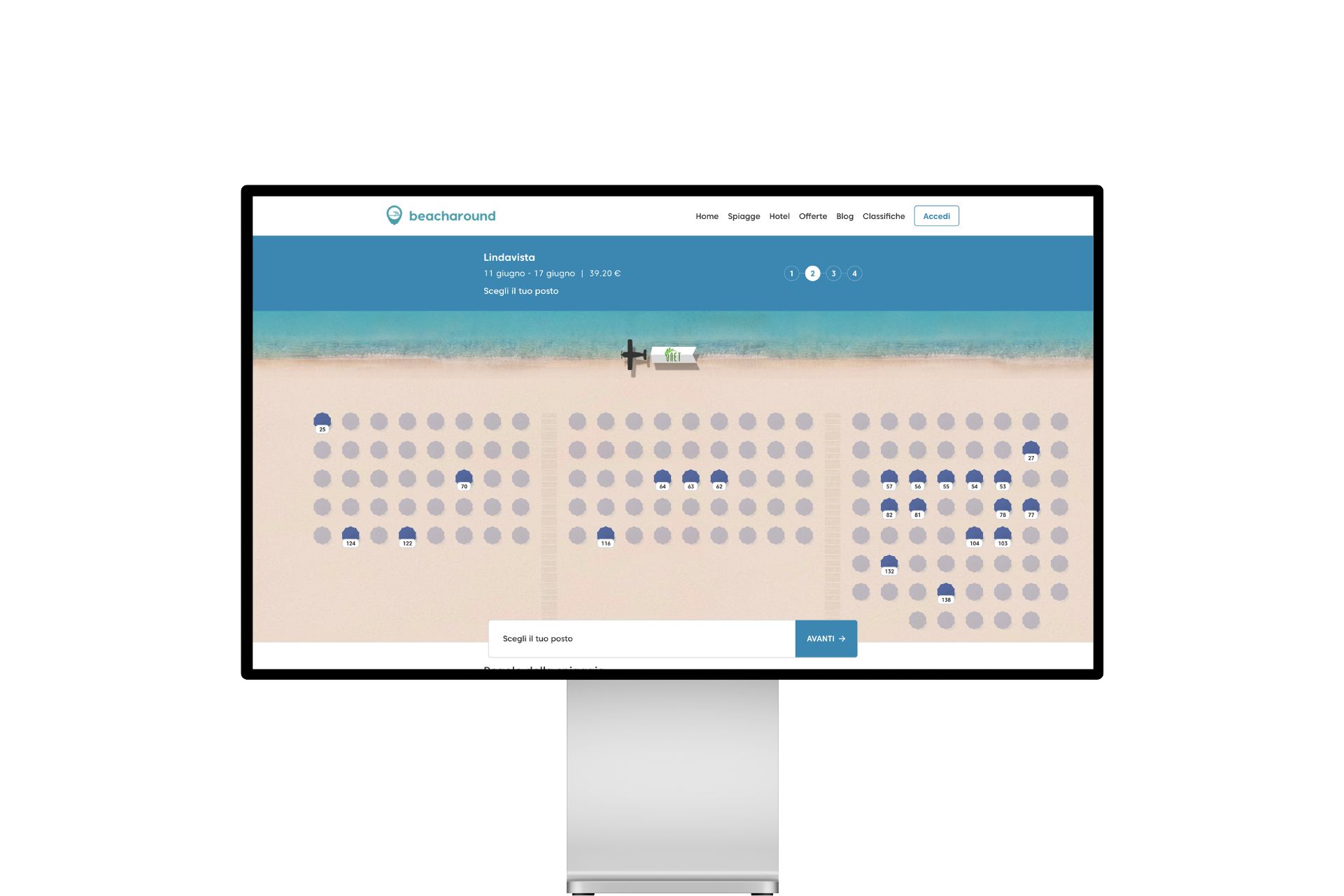
While the market used a cartoon style, Beacharound chose a map somewhere between photorealism and three-dimensional elements. For the beach attendant it is a familiar view, similar to the one in front of them every day. For the end customer it is the simplest way to understand what they are booking.
The map helps the operator present their services well: rows, positions, amenities. Design becomes a positioning tool. Beach club operators ranked Beacharound first in Italy for perceived quality, and second for numbers.



How do you bring traffic to a portal without taking on the tourism giants?
We didn’t chase “beaches in Sardinia”. We went looking for people who already knew which beach club they wanted.
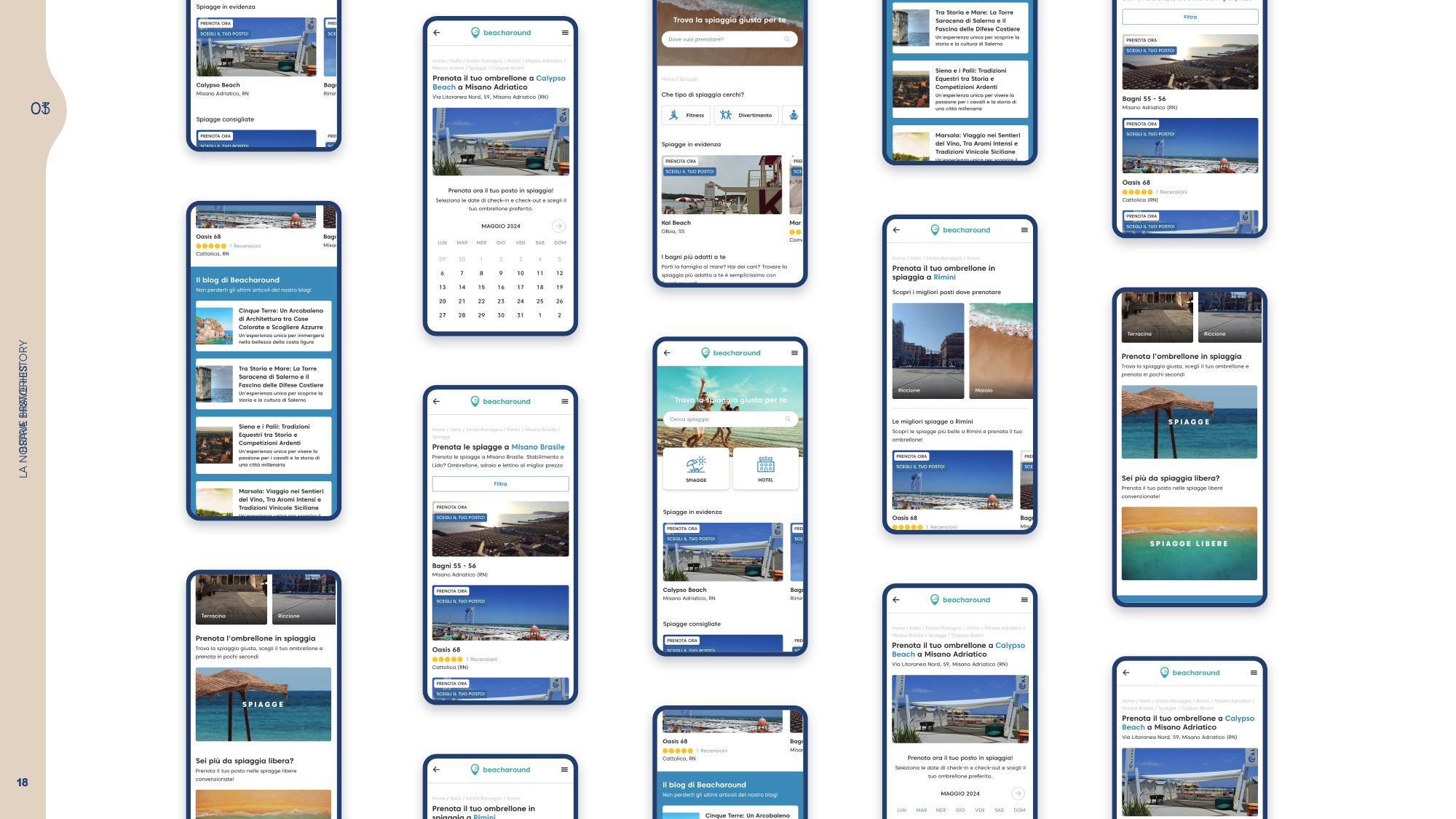
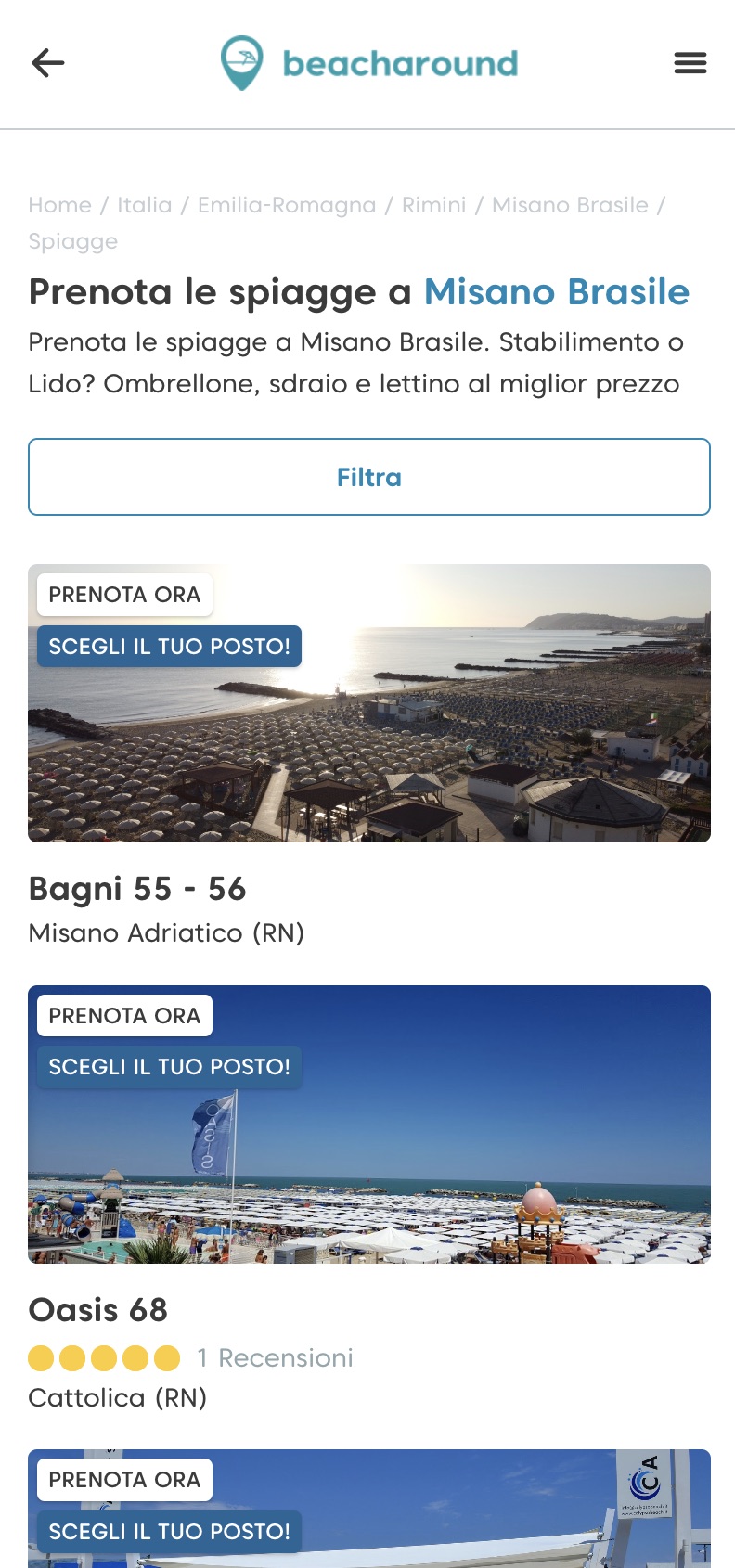
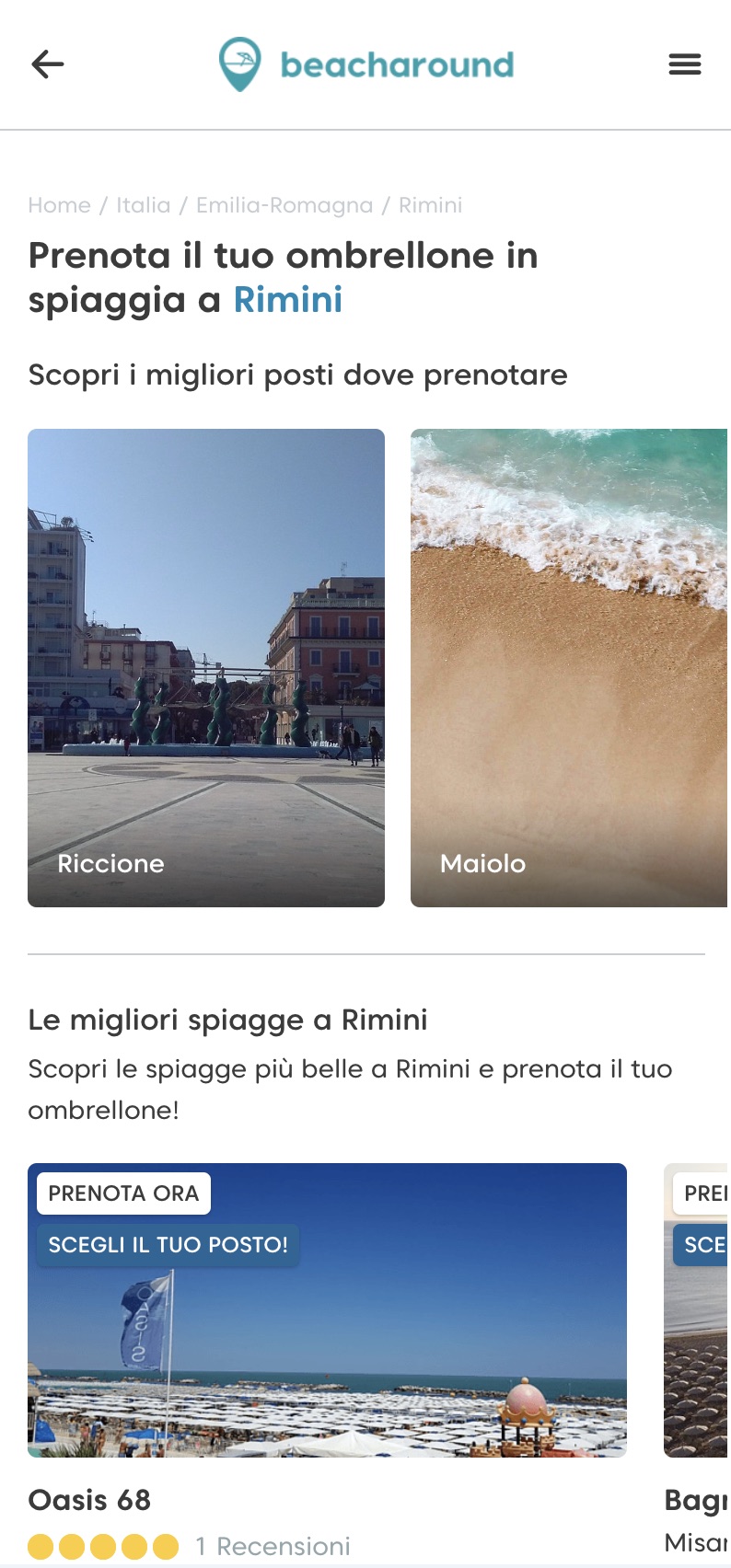
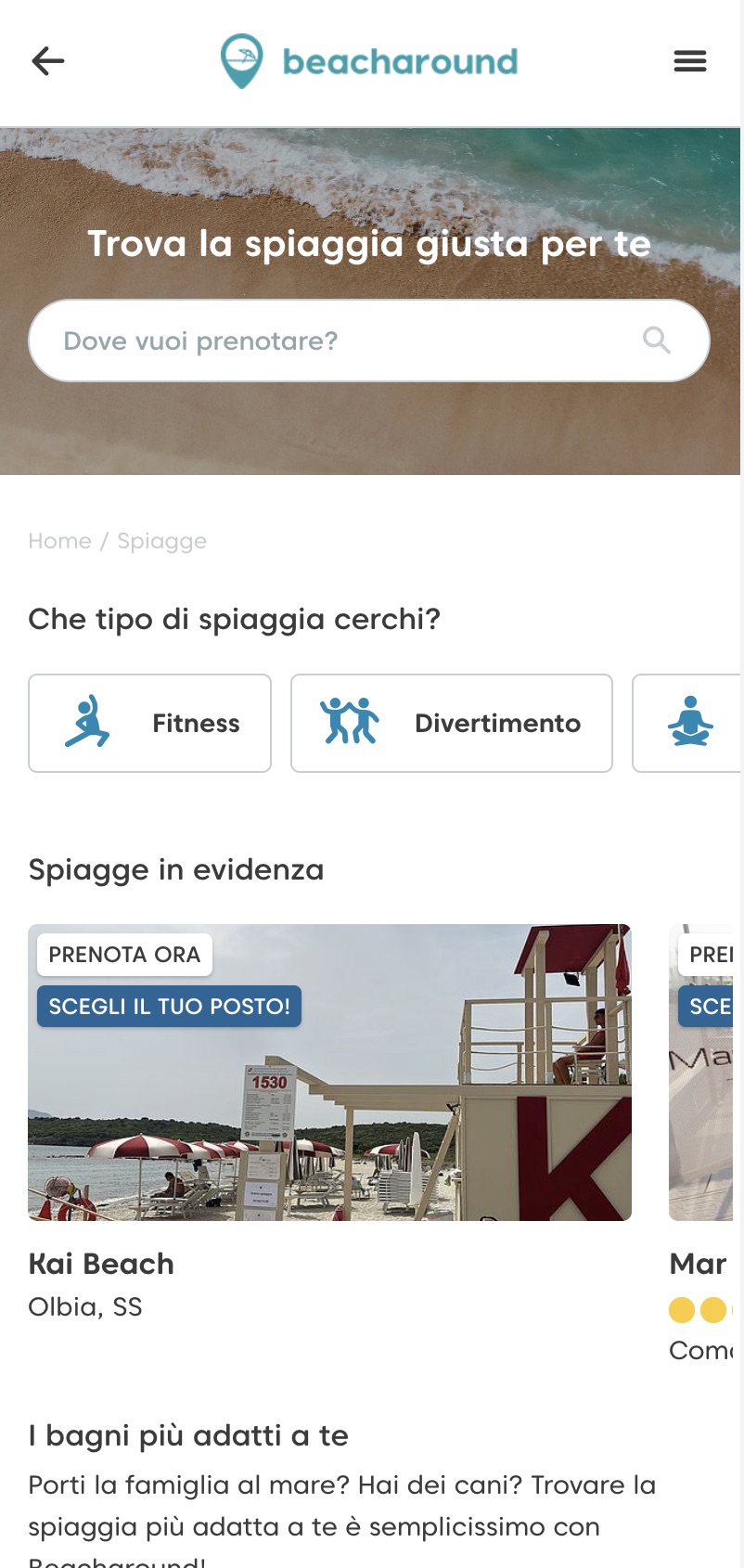
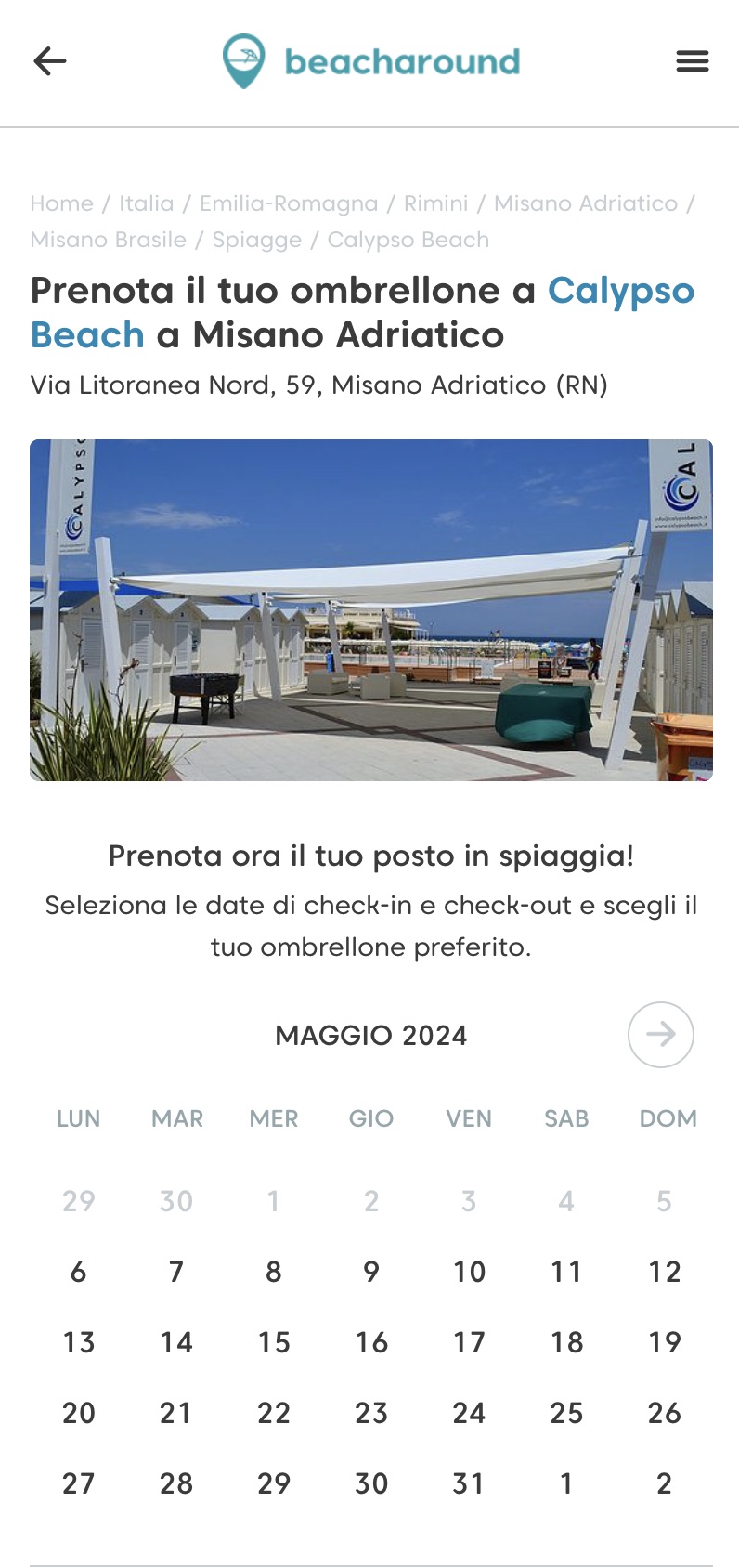
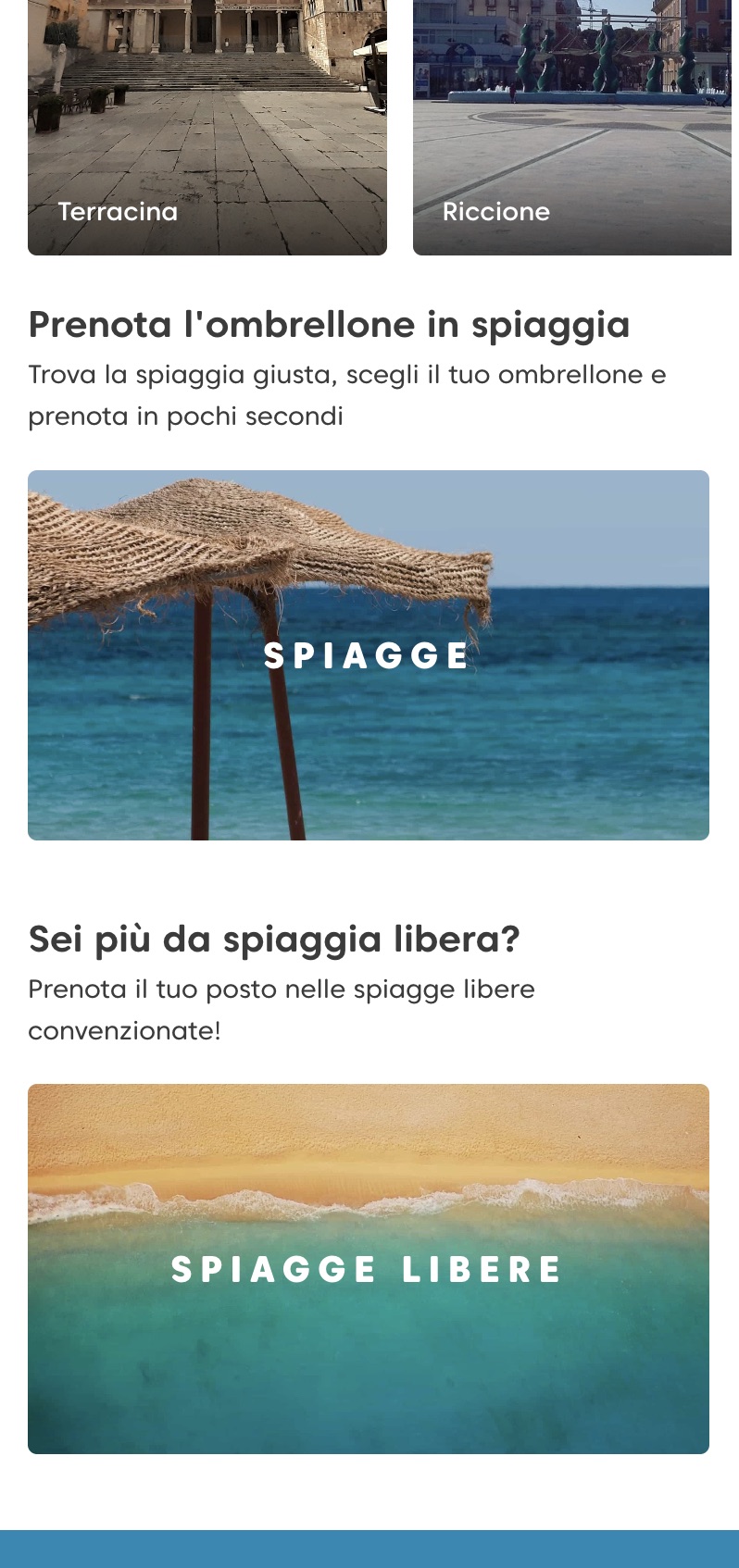
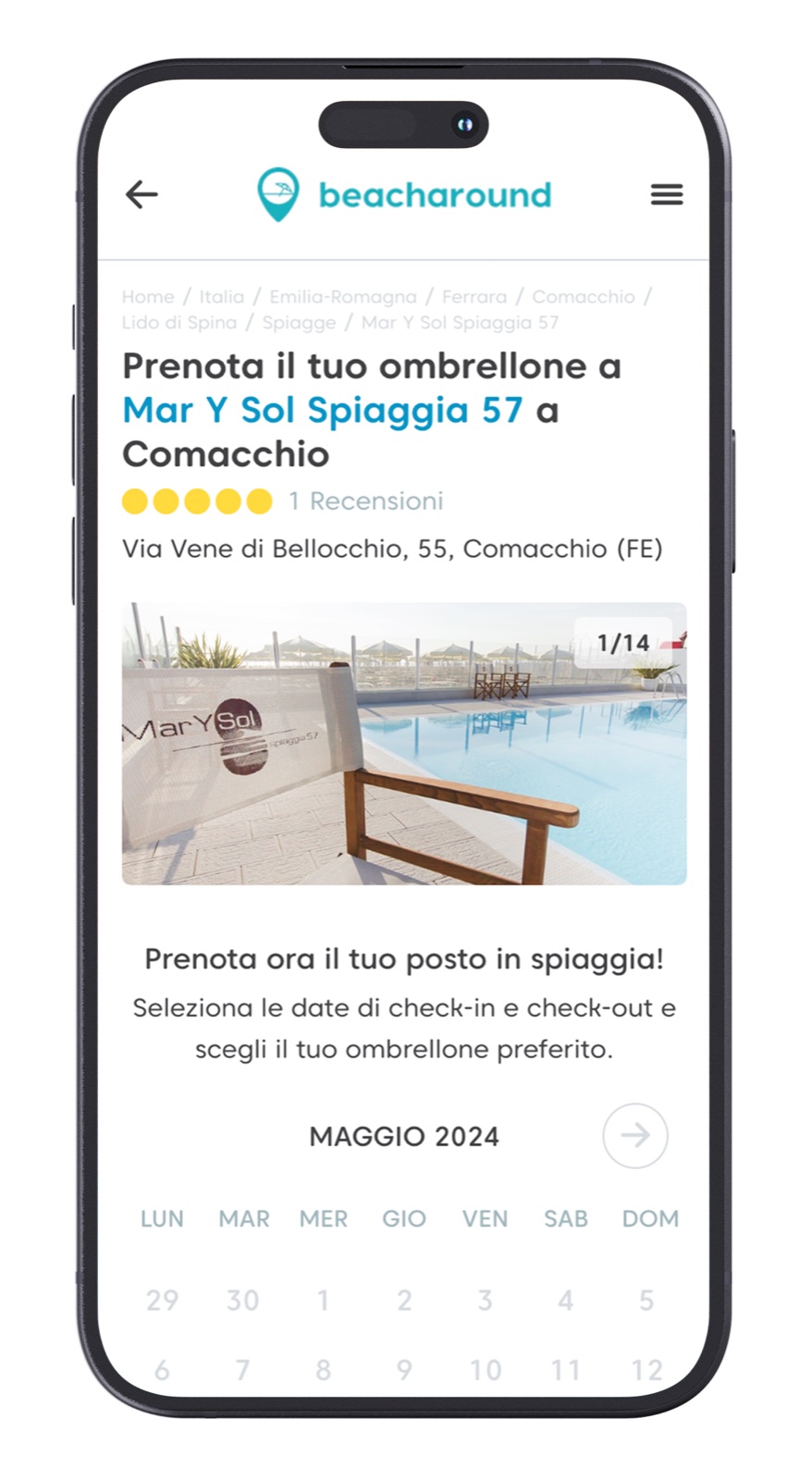
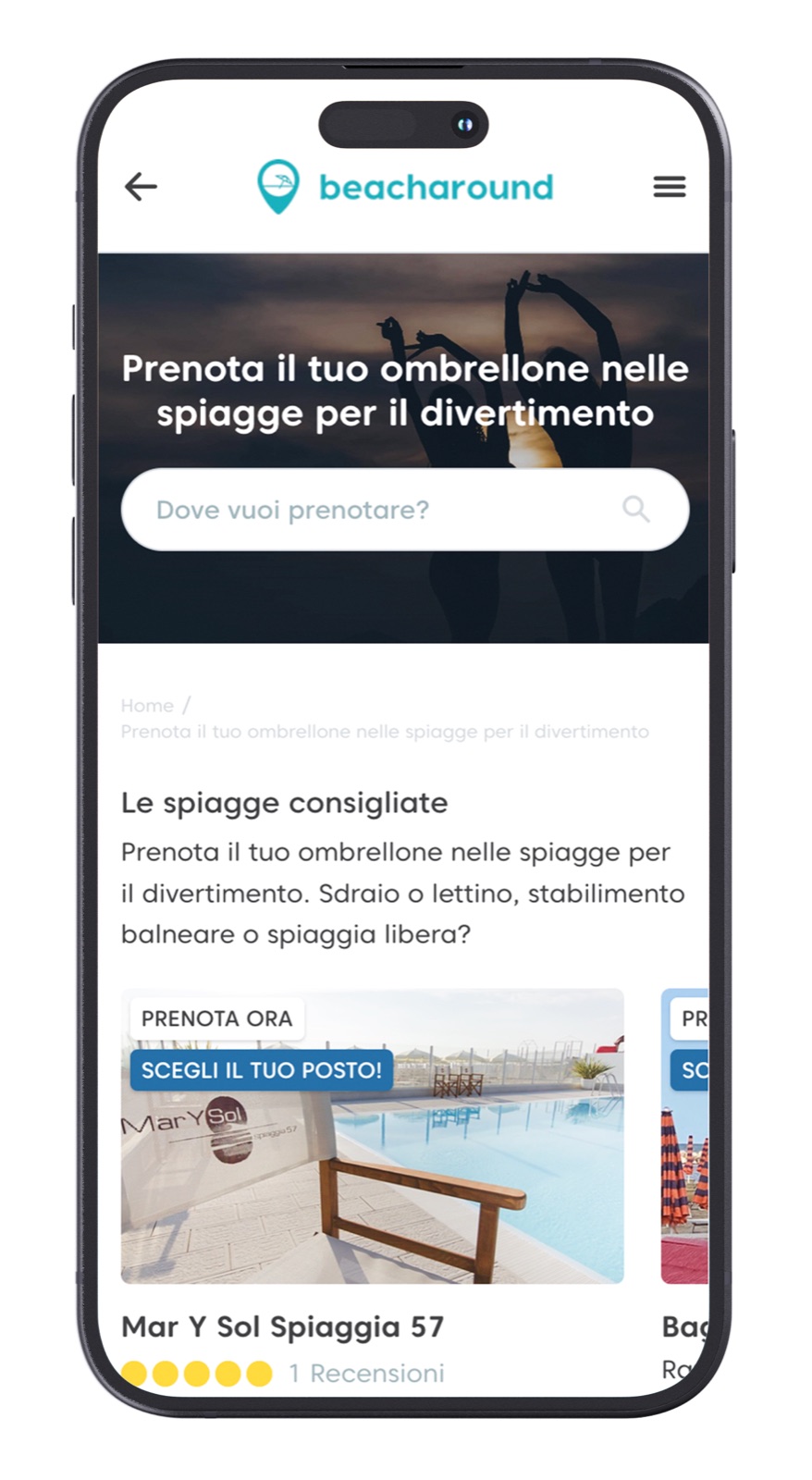
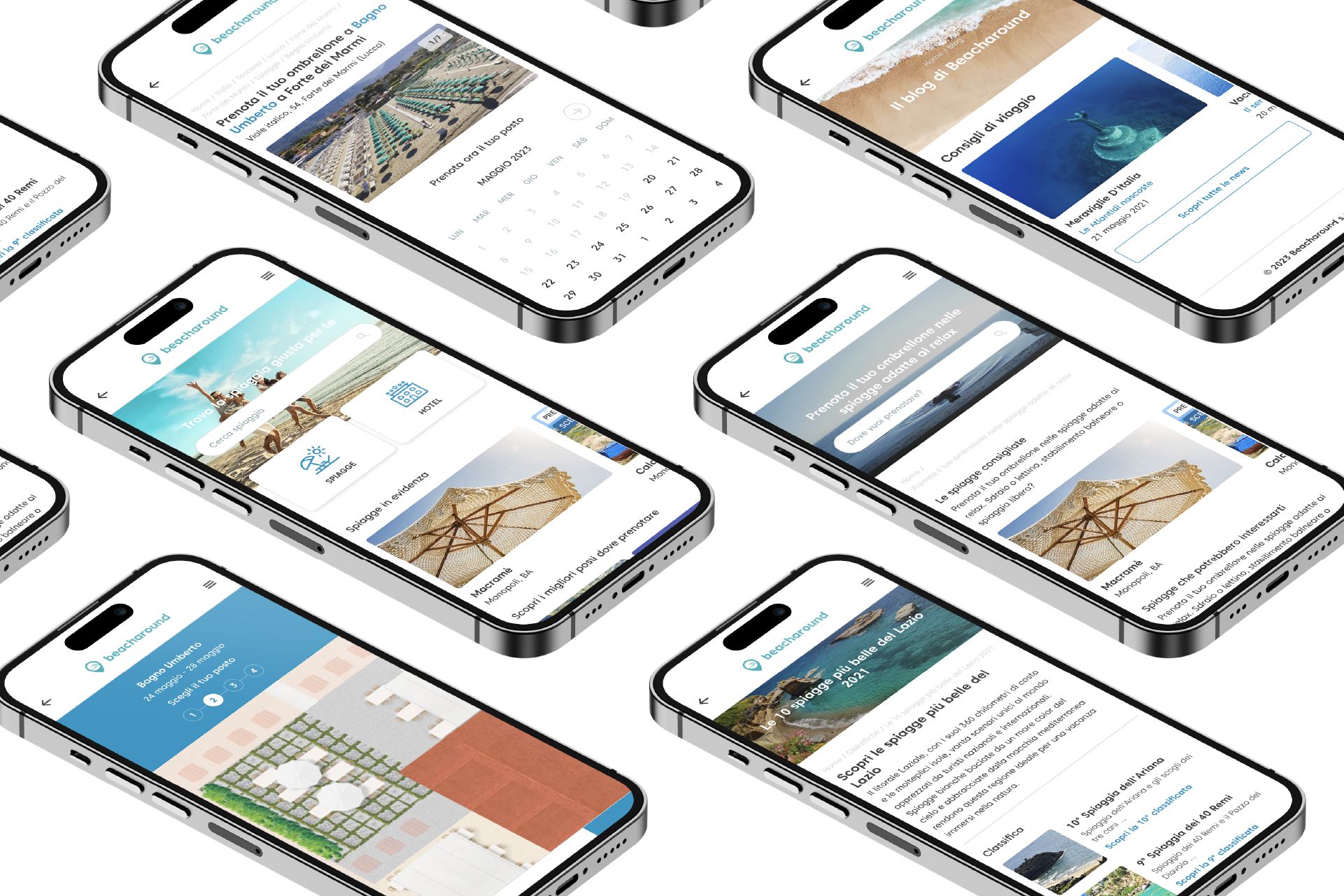
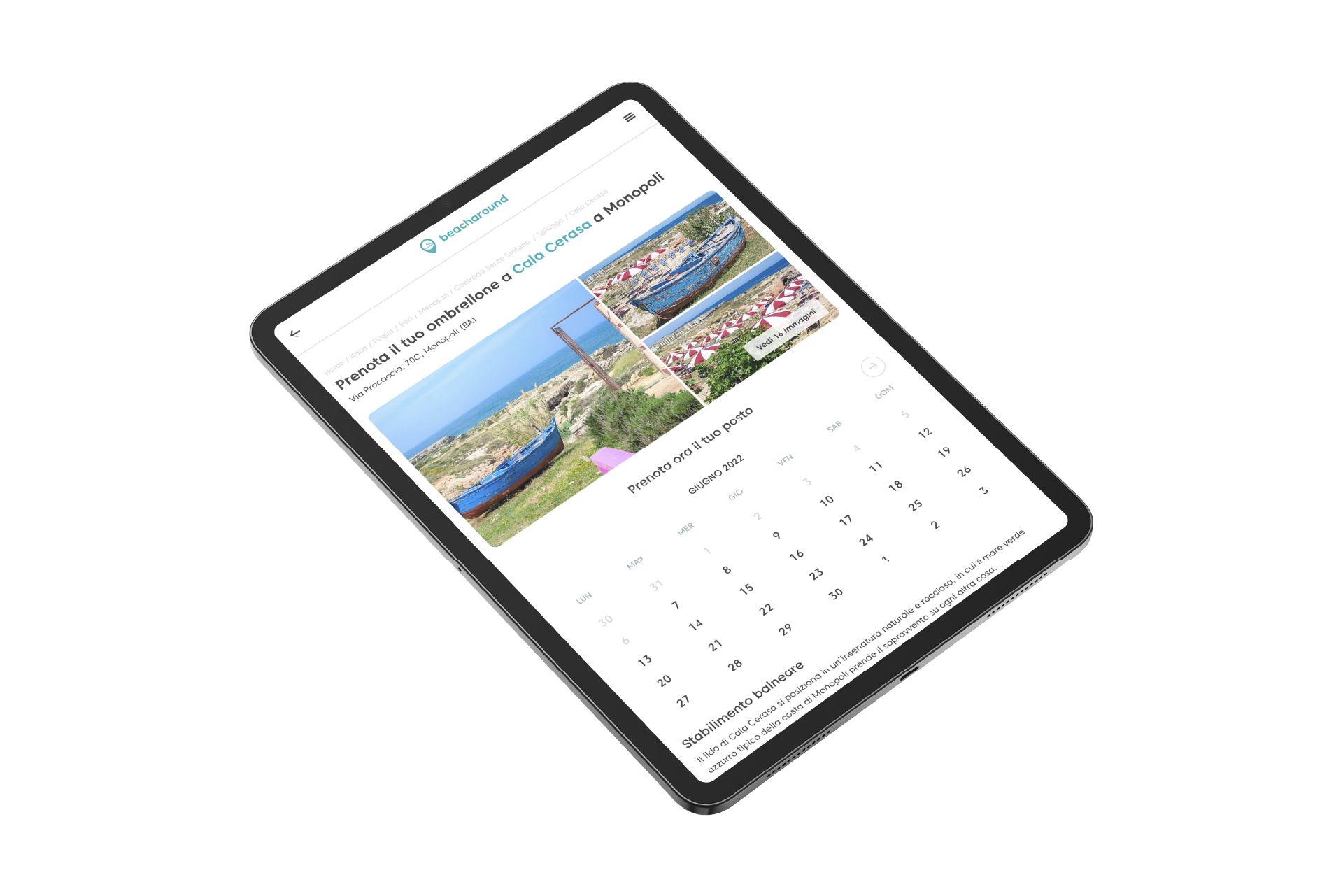
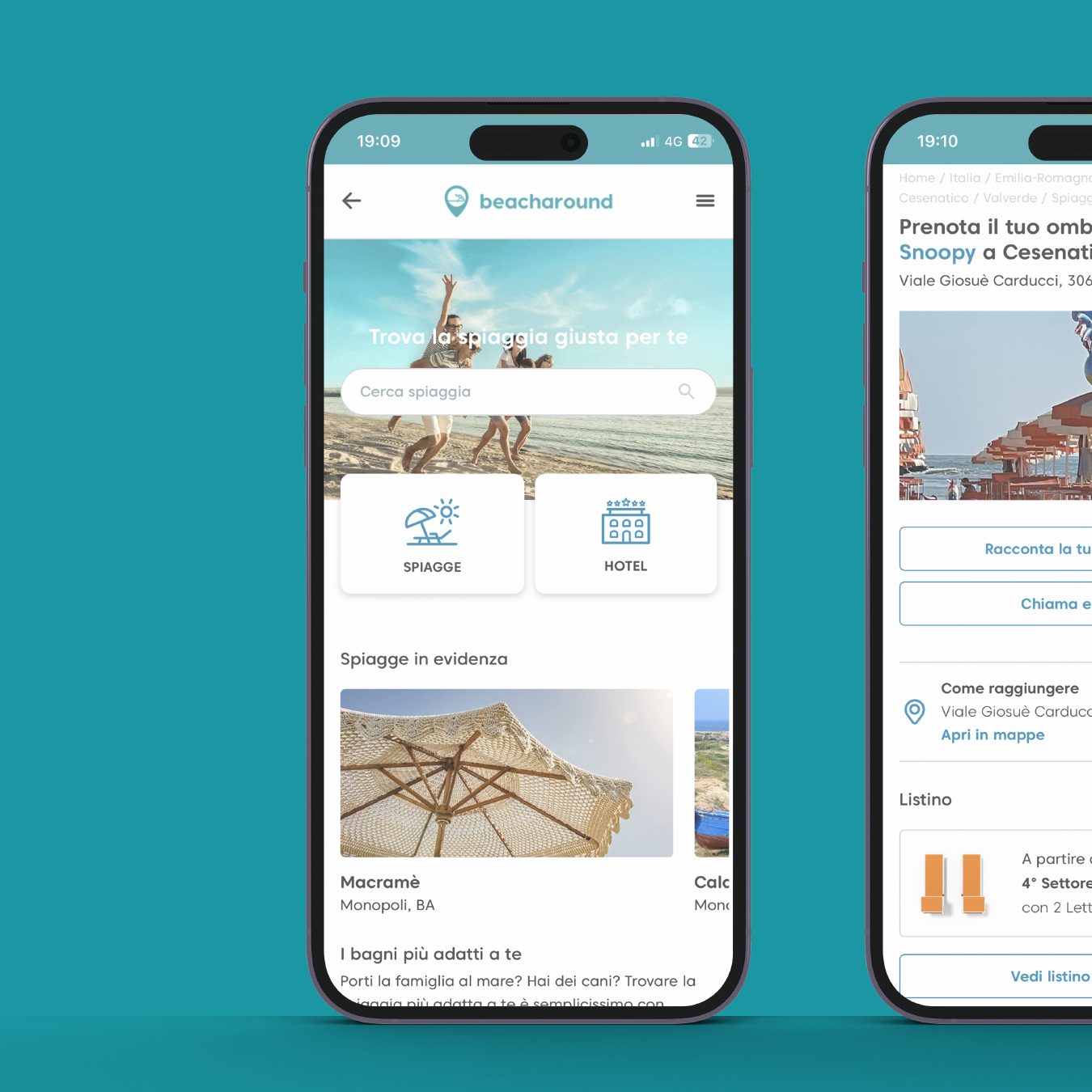
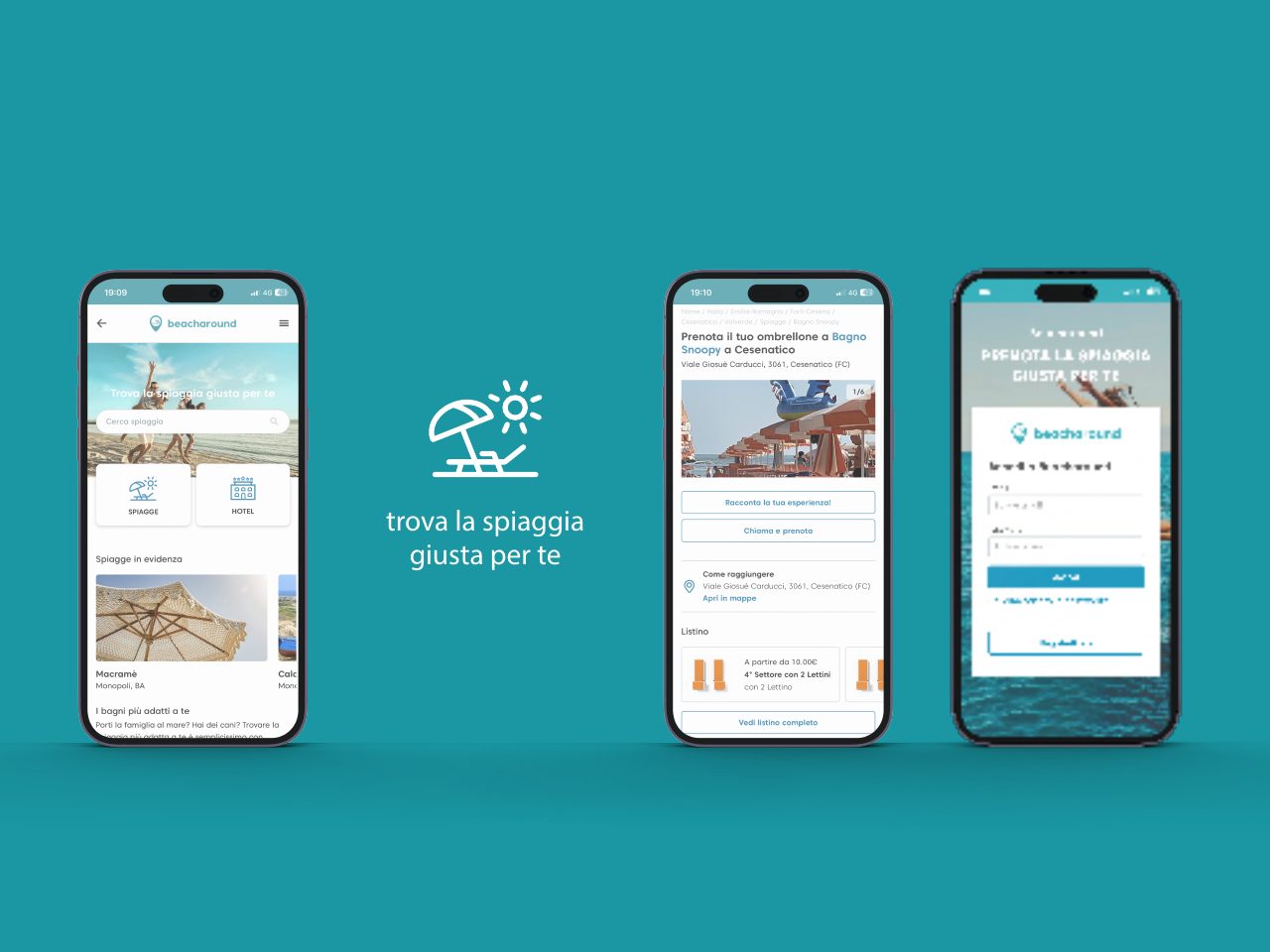
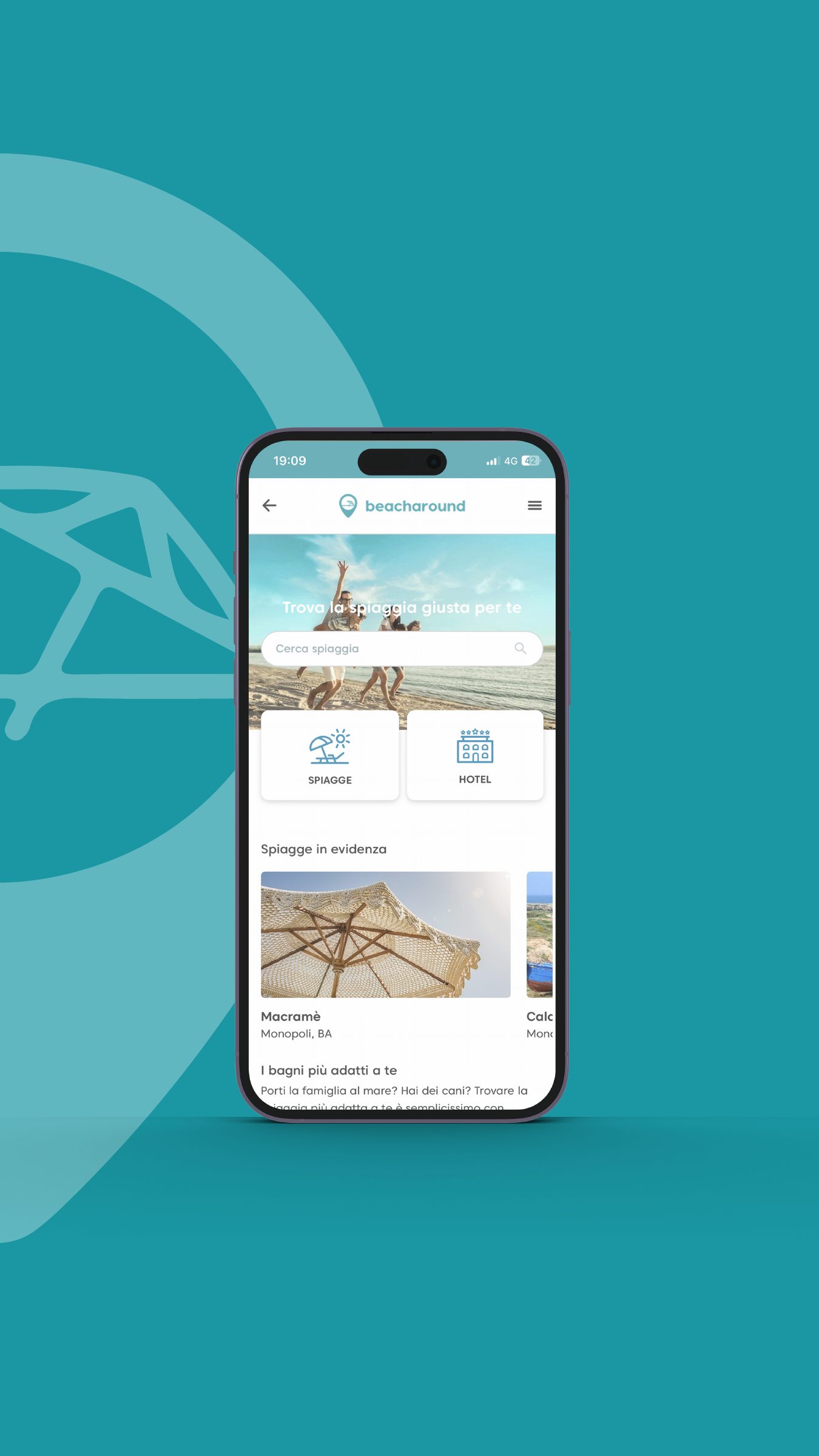
The portal is for the end consumer: find a beach club and book a spot on the beach. To bring it traffic we chose hyper-targeted SEO. Instead of competing with portals and guides on generic searches, Beacharound ranked for individual beach clubs, reaching people who had already decided where to go.
That made it the second most visible B2C platform in searches for beach bookings, after Facile.it. 95% of revenue came from organic channels.
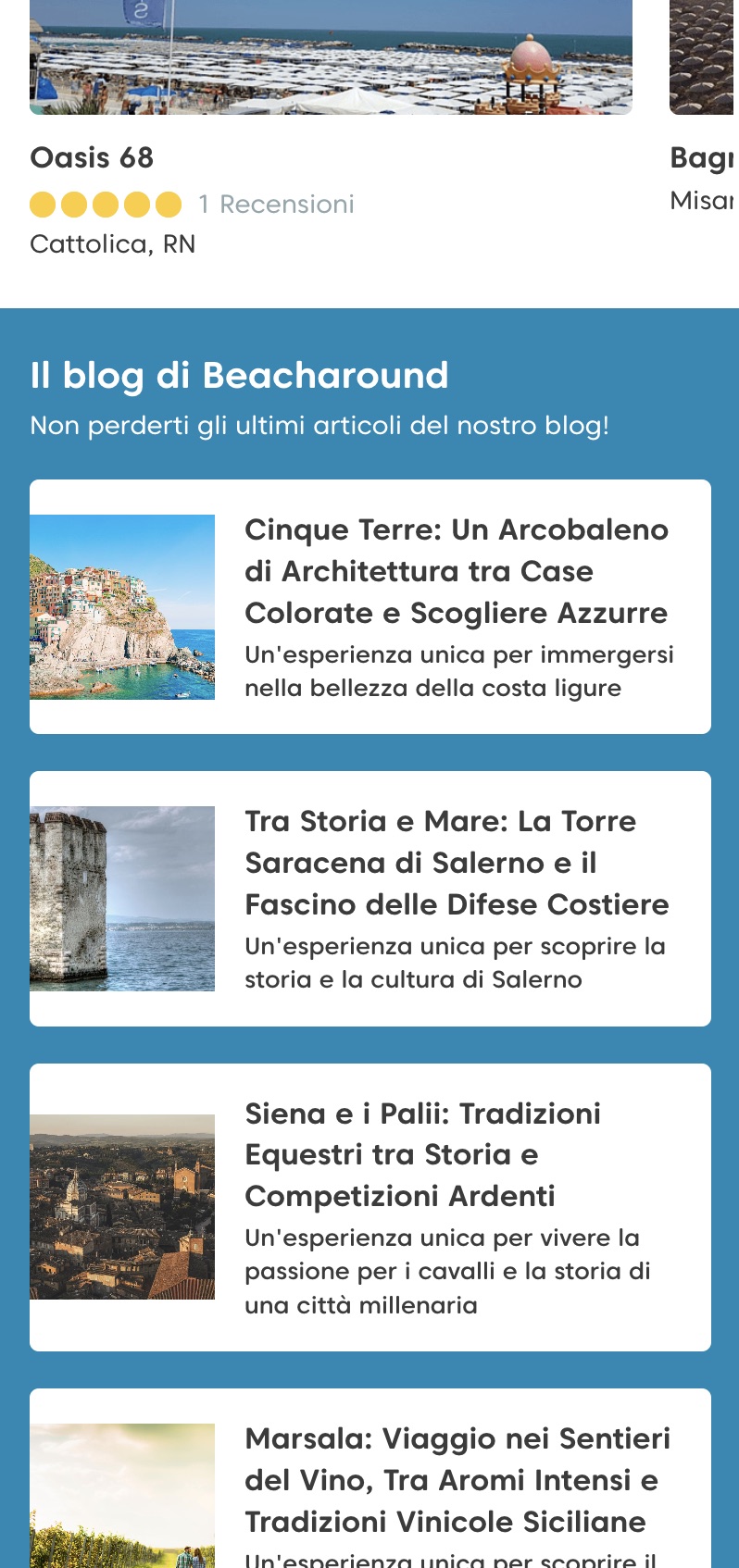
The portal on a smartphone
Hover over a page to scroll it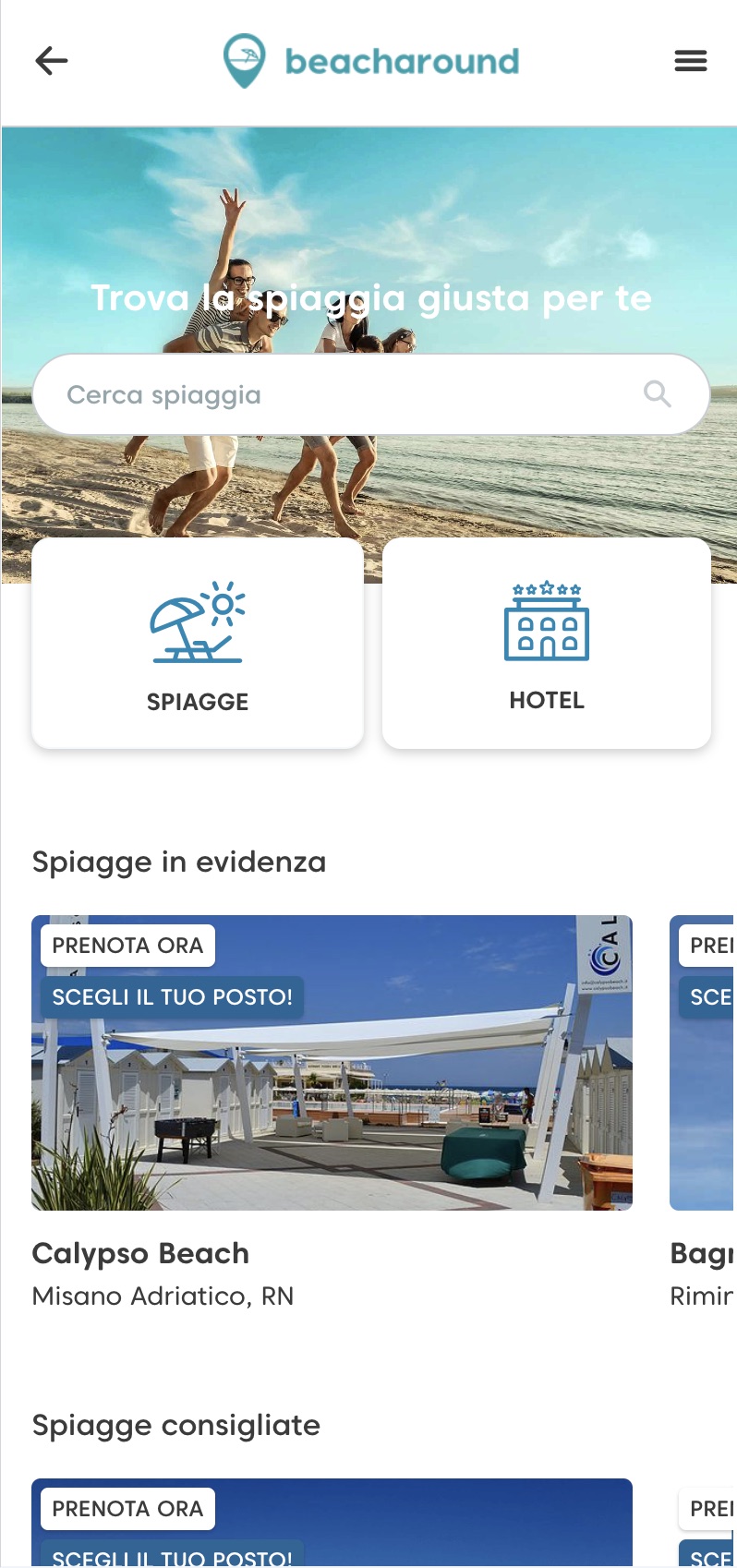
How do you handle a summer peak without paying for servers all year round?
The sea is calm in winter, not in August. The infrastructure does the same: it expands when needed and pulls back when it isn’t.
We built a fully serverless architecture on AWS, with Lambda and event queues. It scales on its own with traffic: low costs in winter, full power in August. No significant outages, even at the summer peaks.
Serverless used this extensively was rarely seen in Europe.
Why should marketing and development sit at the same table?
Because every technical choice is also a market choice. And vice versa.
An integrated workflow: every technical choice was driven by the market, every marketing choice was built on what the technology made possible. Faster releases, closer to users’ real needs.
The method is growth hacking: creativity, data, experiments, measurability.
Active users, year by year
From our Brave Histories presentation, February 2025Communication
Posts and stories for Beacharound and Beacharound Business · scroll →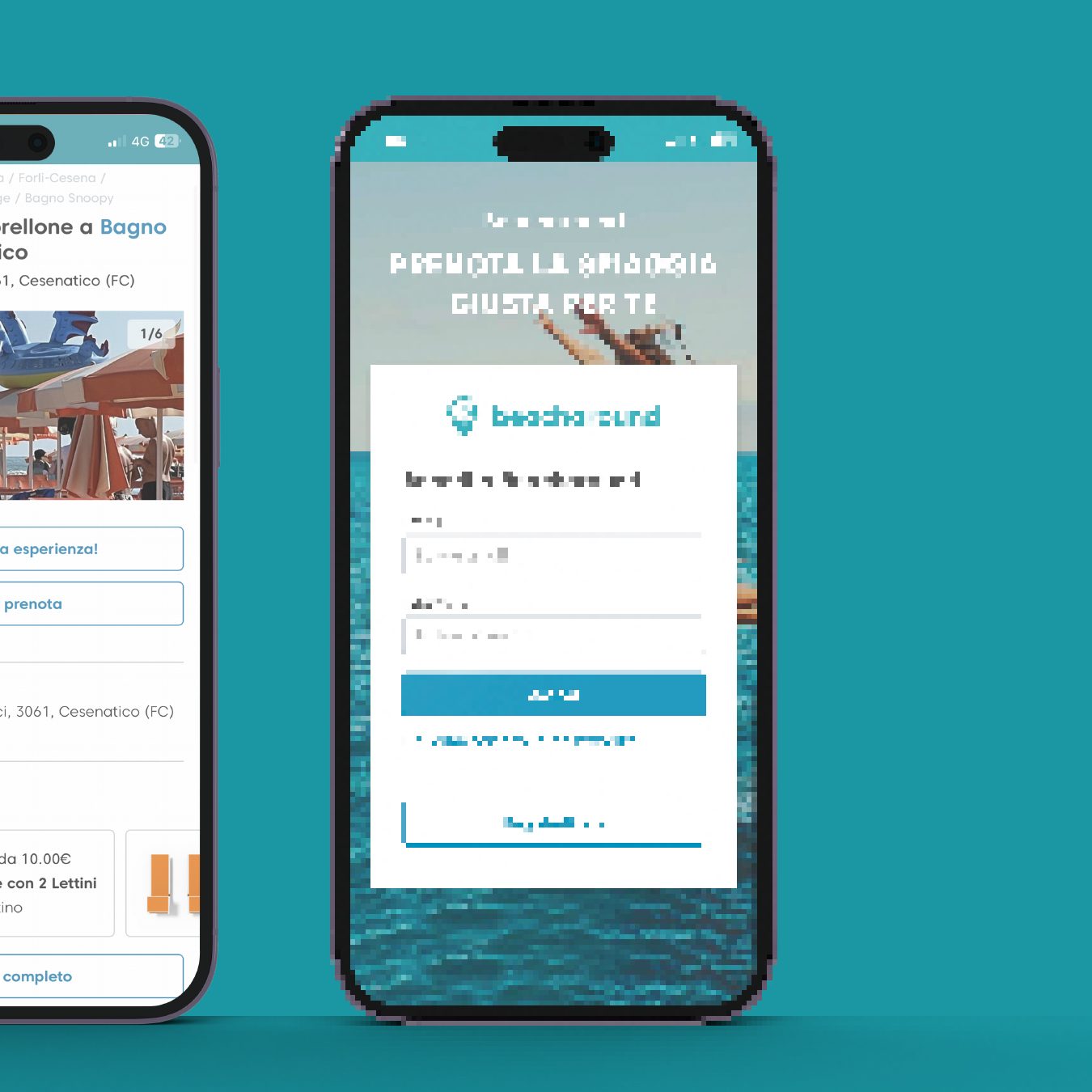





When has a startup really worked?
When someone decides to buy it.
Beacharound was acquired by a company in the sector. The product built with Alberto and his team had become something the market recognised as valuable.
Opificio Lamantini Anonimi believed in the project so much that it joined the company: not just a partner, but a shareholder.
In the press
The media that covered BeacharoundCorriere della Sera · Il Sole 24 Ore · Sky TG24 · TGR · Mashable · Radio Deejay · Fanpage · Il Resto del Carlino · Libero · RiminiToday
Frequently asked questions
Beacharound and Opificio, in short.
Who developed Beacharound?
Beacharound was founded by Alberto Parma, an entrepreneur from Cattolica, Italy, and developed together with Opificio Lamantini Anonimi, which designed its product, user experience, interface and infrastructure. Opificio Lamantini Anonimi also joined the company as a shareholder.
What is Beacharound Business?
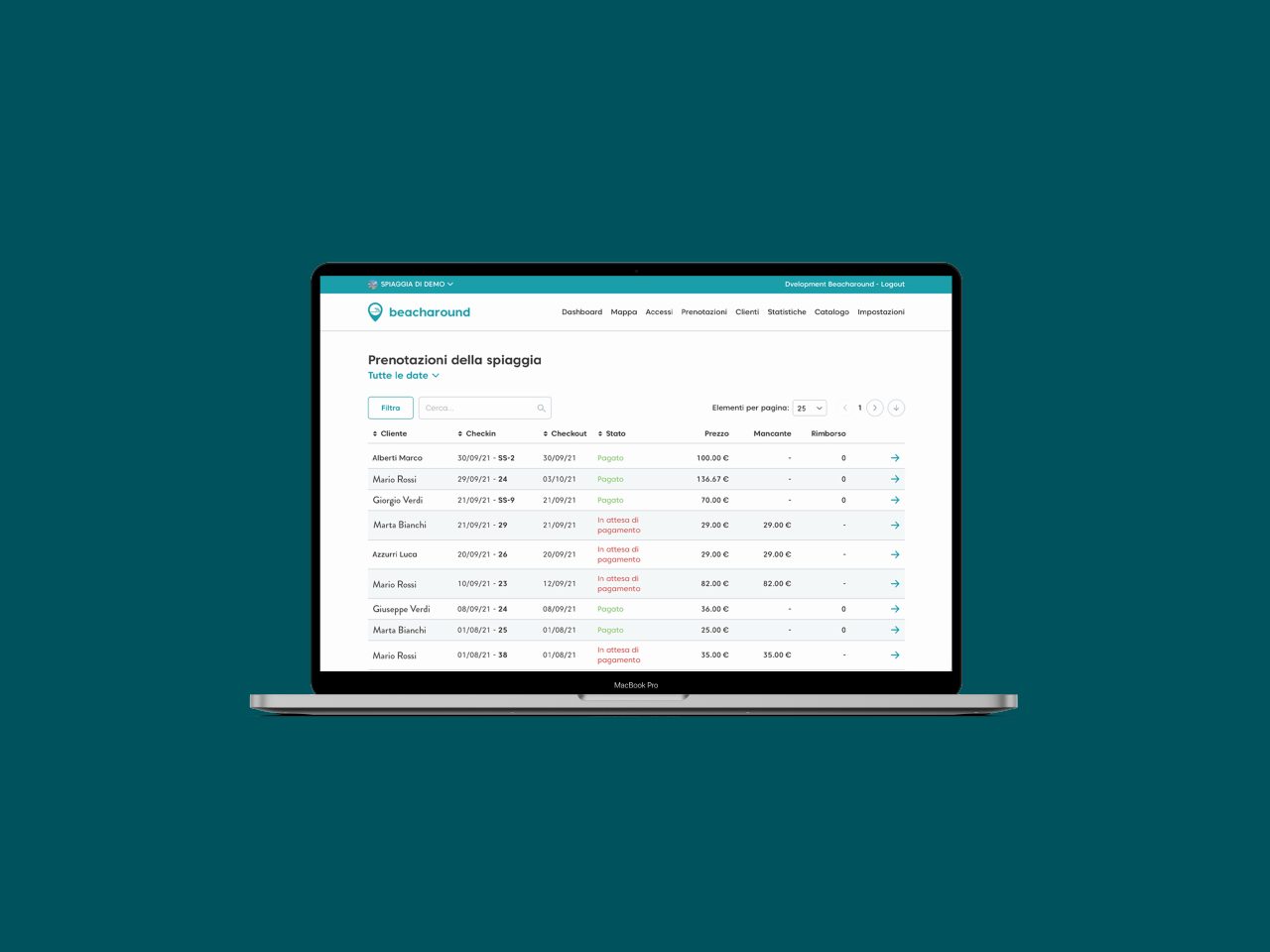
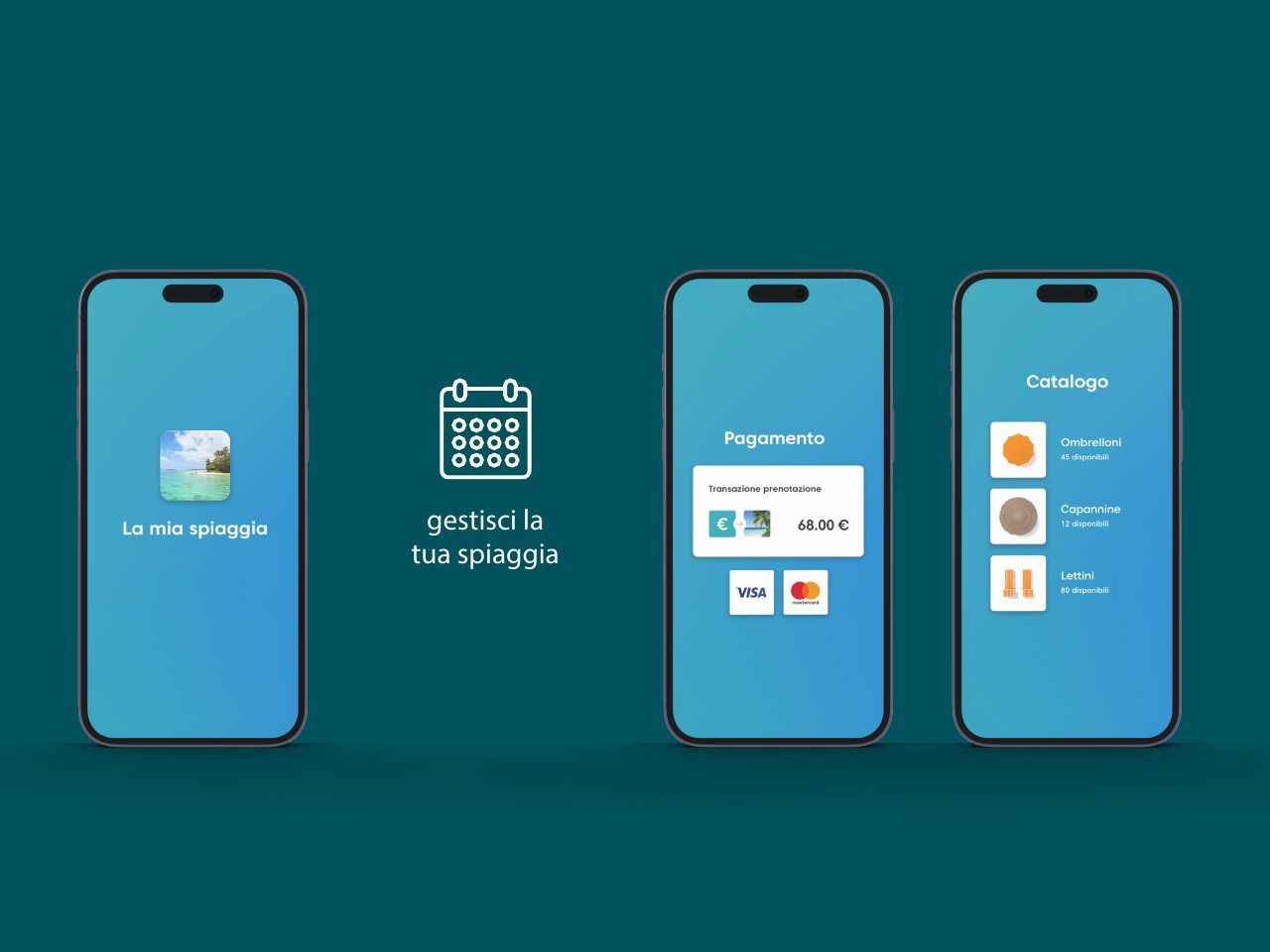
It is Beacharound’s cloud management system for beach clubs: interactive beach map, planner, bookings, payments and service catalogue. Alongside it was the Beacharound portal, for booking a beach umbrella online.
What technology did Beacharound use?
A serverless infrastructure on AWS, with Lambda and event queues, and around 3,000 microservices running at the same time. It scaled on its own with summer traffic and cost little in winter.
Does Opificio Lamantini Anonimi develop startups and digital products?
Yes. With Beacharound, Opificio Lamantini Anonimi took the startup from idea to market, as product and technology partner and also as a shareholder, all the way to the acquisition.
What made the Beacharound beach map different?
It combined photorealism with three-dimensional elements, while competitors used a cartoon style. For the beach attendant it was a view similar to the one in front of them every day; for the end customer, the simplest way to understand what they were booking.